




The People's Architect: How Carol Ross Barney Gave Chicago Back Its River
In 1970, the Chicago River was home to fewer than 10 species of fish. Not surprising: for much of its history, the waterway had been an open sewer. Today, there are almost 80 fish species, and water quality continues to improve.
The river is a haven for humans, too, thanks in part to Carol Ross Barney. Carol and her Ross Barney Architects team — with landscape architects Sasaki — designed the Chicago Riverwalk. “If you go to the Riverwalk in the summer, you may find it almost impassable because people are there,” Carol says. “The irony is, Chicago is here because the river is here. It had sort of hidden itself.”
In our latest CAB Voices video, produced in partnership with the Chicago Architecture Biennial, Carol explains why infrastructure, like the Riverwalk and the Bloomingdale Trail, is an oft-overlooked design challenge — and why solving it is a matter of rights.
Design as a democratic right
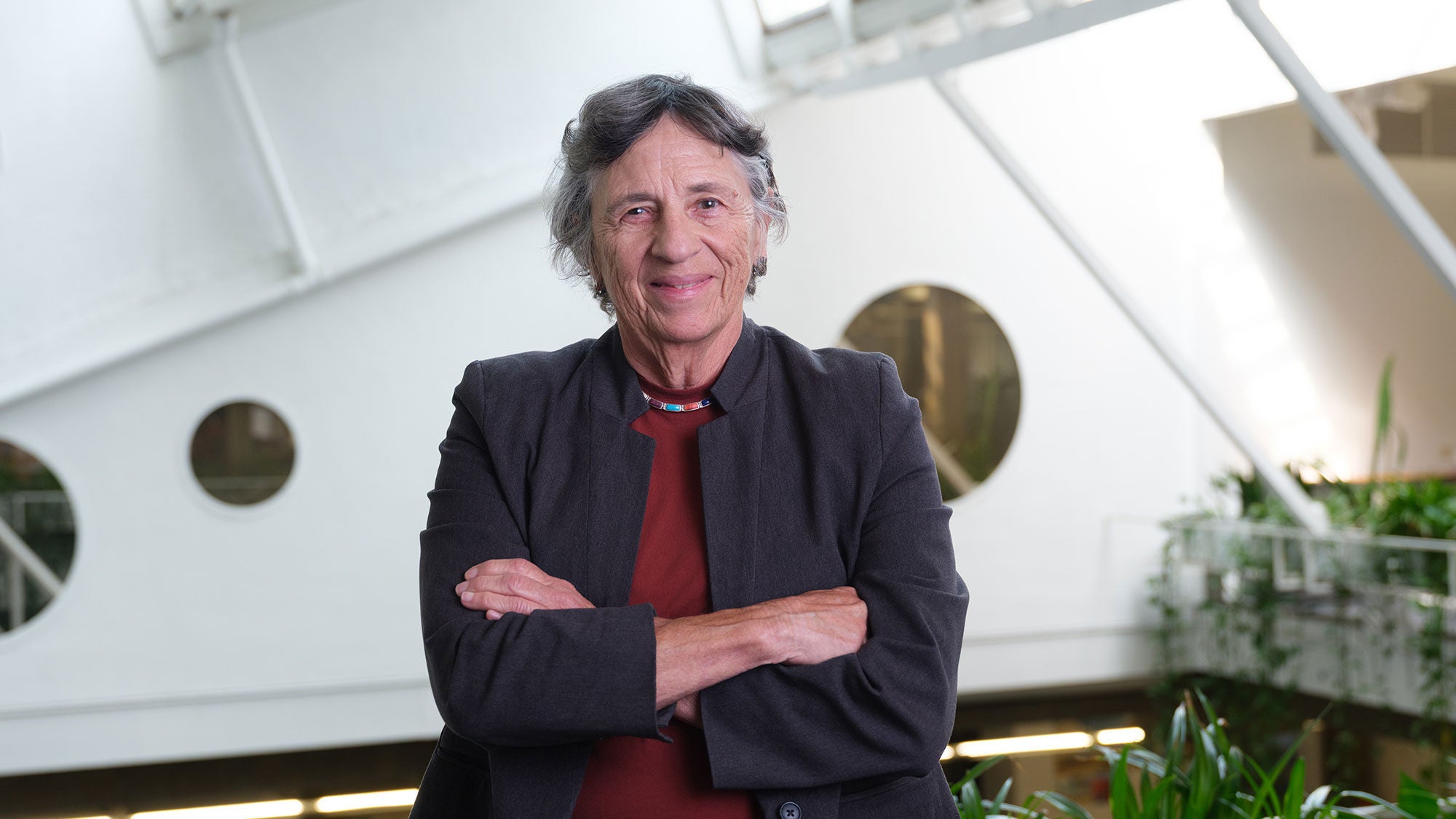 Carol Ross Barney founded Ross Barney Architects in 1981. Over a nearly half-century career, she has contributed a large body of work, most of it in the public realm.
Look at Ross Barney Architects’ portfolio, and you’ll find train stations, power plants, federal buildings, and parks. Is that architecture? “My answer is ‘yes,’” Carol says. “Design improves every single one of those things. It’s the connective tissue of the city — the stuff that you touch, you see, that affects your life every day.”
Carol’s design philosophy is simple: Design is a superpower, and its value should be democratically applied. “Our planet, our societies, our neighborhoods are better when we’re working well together,” the lifelong Chicagoan says. “We approach design as problem-solving. If it’s buildable, if it’s economical, if it works well, it will be beautiful.”
Building the Chicago Riverwalk to be fun and functional
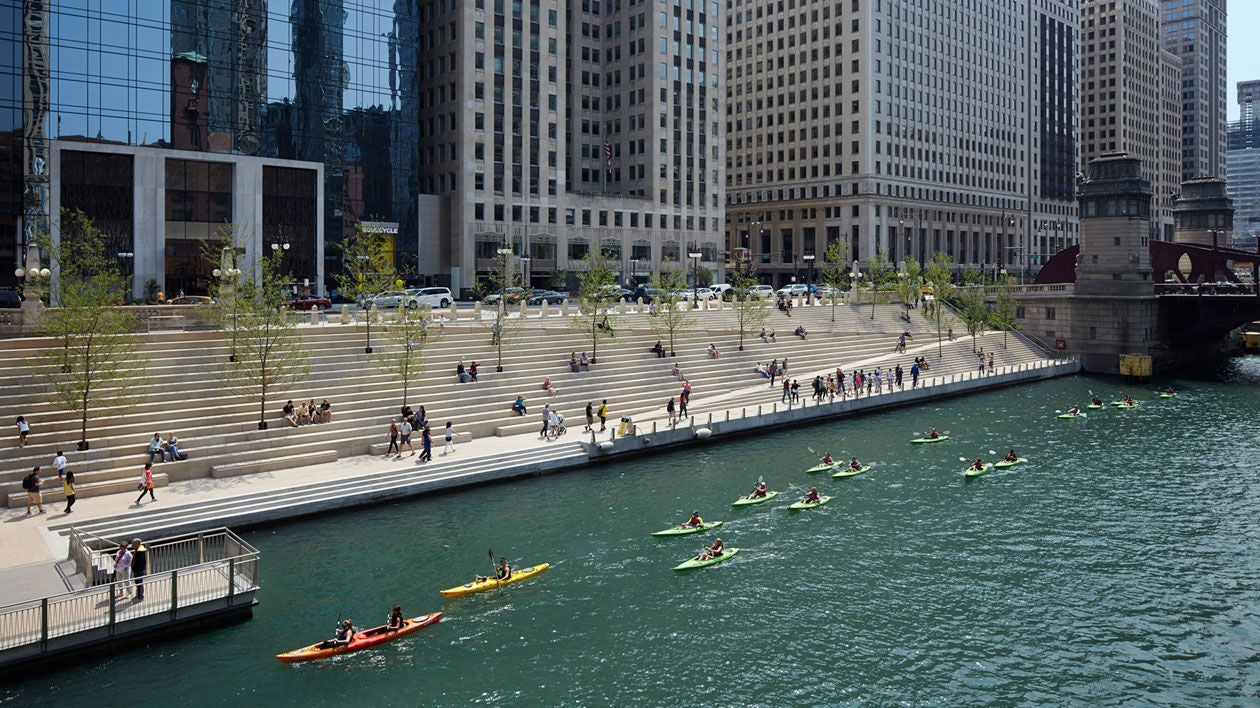 In Chicago’s early days, the river was teeming with traffic, thanks to the city’s importance for transportation and manufacturing. Today, it is used by all sorts of craft, including river taxis, tour boats, and kayaks. Credit Kate Joyce Studios
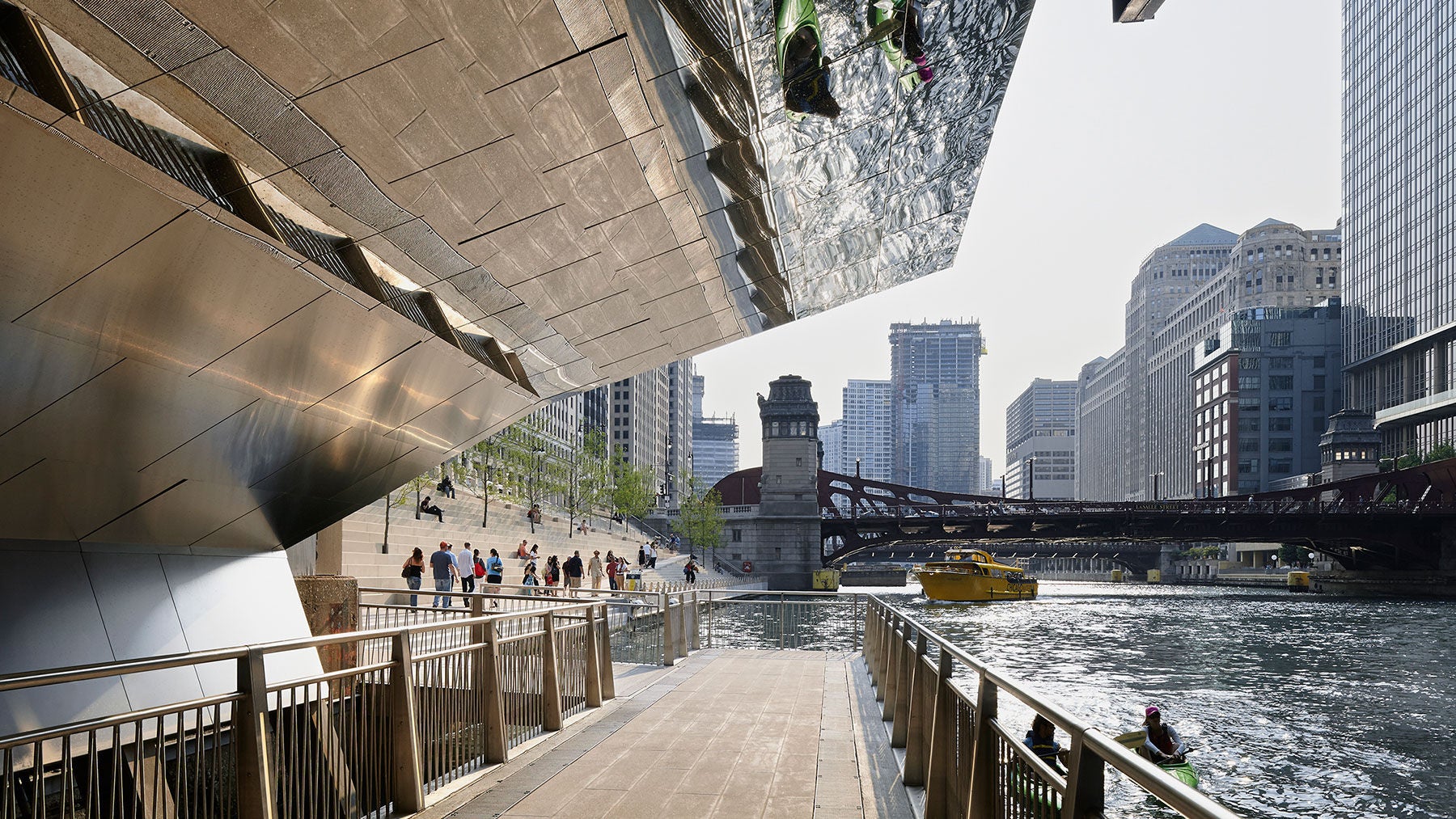 The Chicago Riverwalk supports a variety of activities, from kayak rentals to running paths, dining to live music, bird-watching to fishing. Credit Kate Joyce Studios
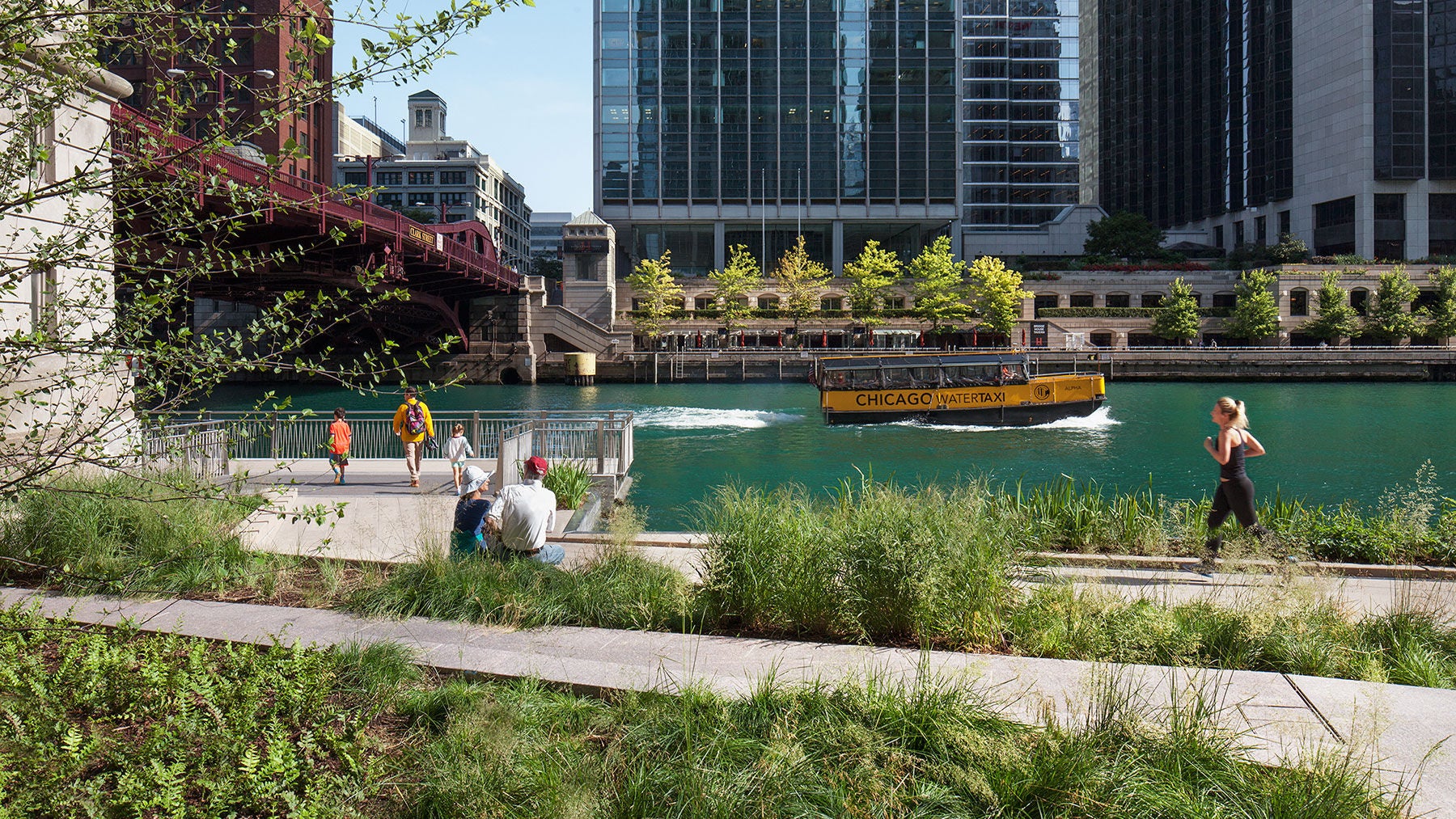 A large portion of Chicago’s 57 million annual visitors spend time on the riverwalk. Walking or running the 1.25-mile public promenade is a favorite pastime for many locals and tourists alike. Credit Kate Joyce Studios
The 1.25-mile Riverwalk checks all Carol’s boxes. She calls it a “medium to small urban project” with a roughly $200 million price tag. And it is indeed beautiful, with its paving, trees, precast benches, and “rooms” between bridges. But that’s only half the story.
The Riverwalk is double-duty infrastructure, co-starring as part of Chicago’s flood-relief system. When storms overwhelm the city’s storage capacity, the river can rise by seven feet. The walkway is designed to be inundated. Then drain. Then reopen.
Amrize materials helped the project realize both objectives, says Nollaig Forrest, Amrize’s Chief Marketing & Corporate Affairs Officer. “We had to bring technical innovation at every step: high-performance materials that could withstand flooding and at the same time age gracefully in Chicago’s harsh climate.”
Rails to trails to community connections with the 606
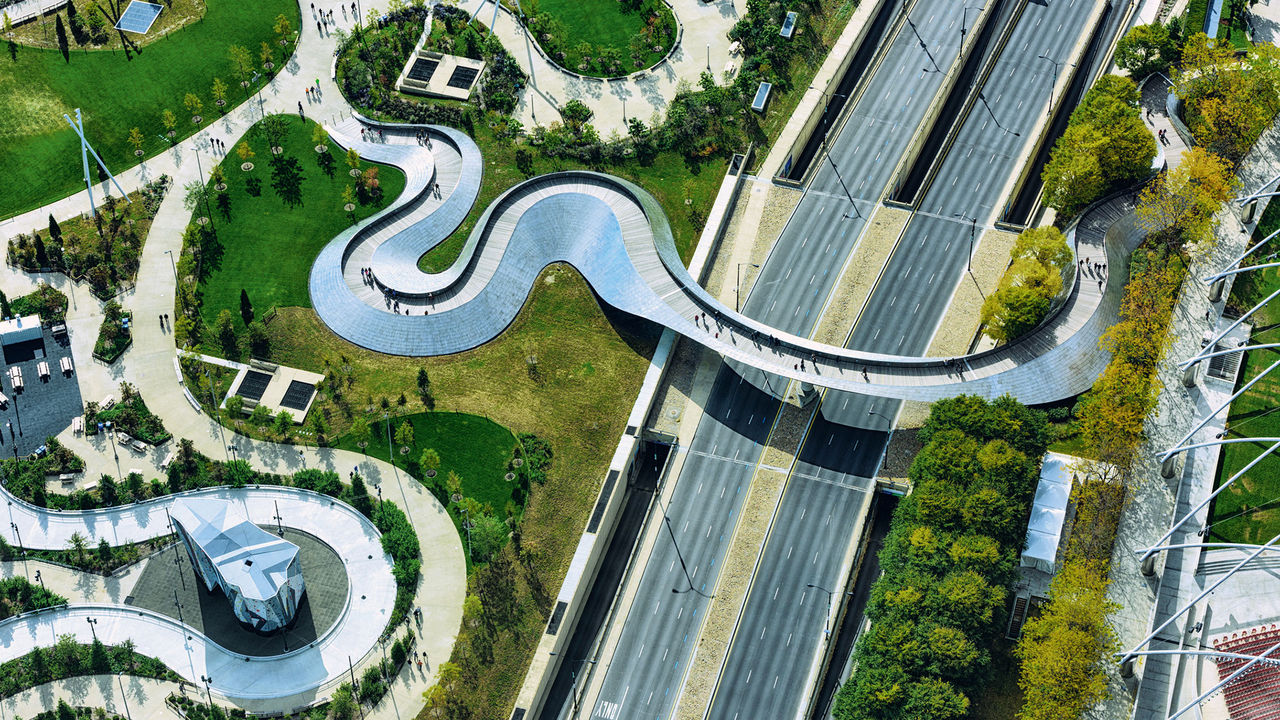
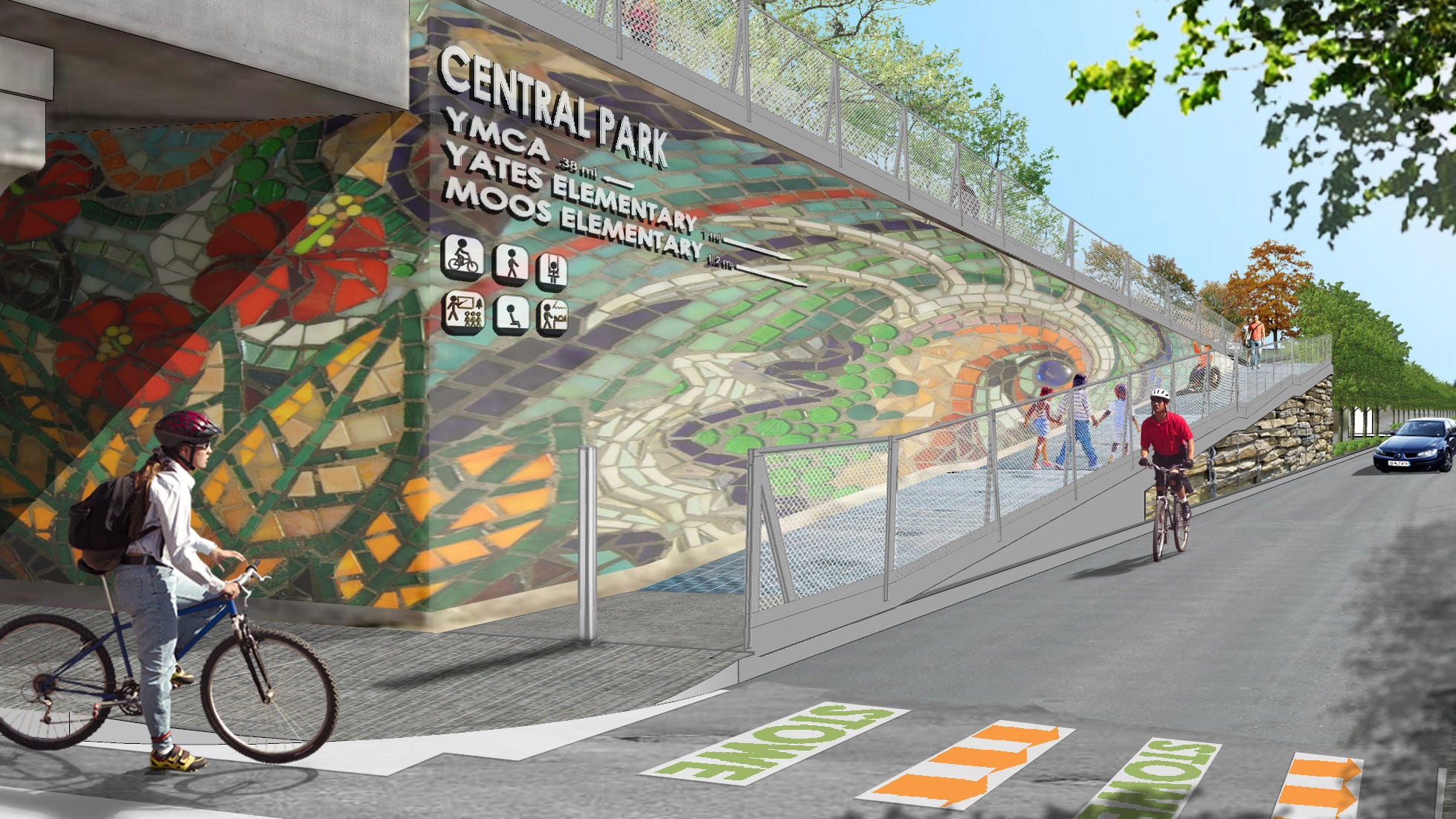 This rendering of the Bloomingdale Trail shows the vision for this urban amenity, which connects four neighborhoods across 2.74 miles with 12 access points. Courtesy of Ross Barney Architects
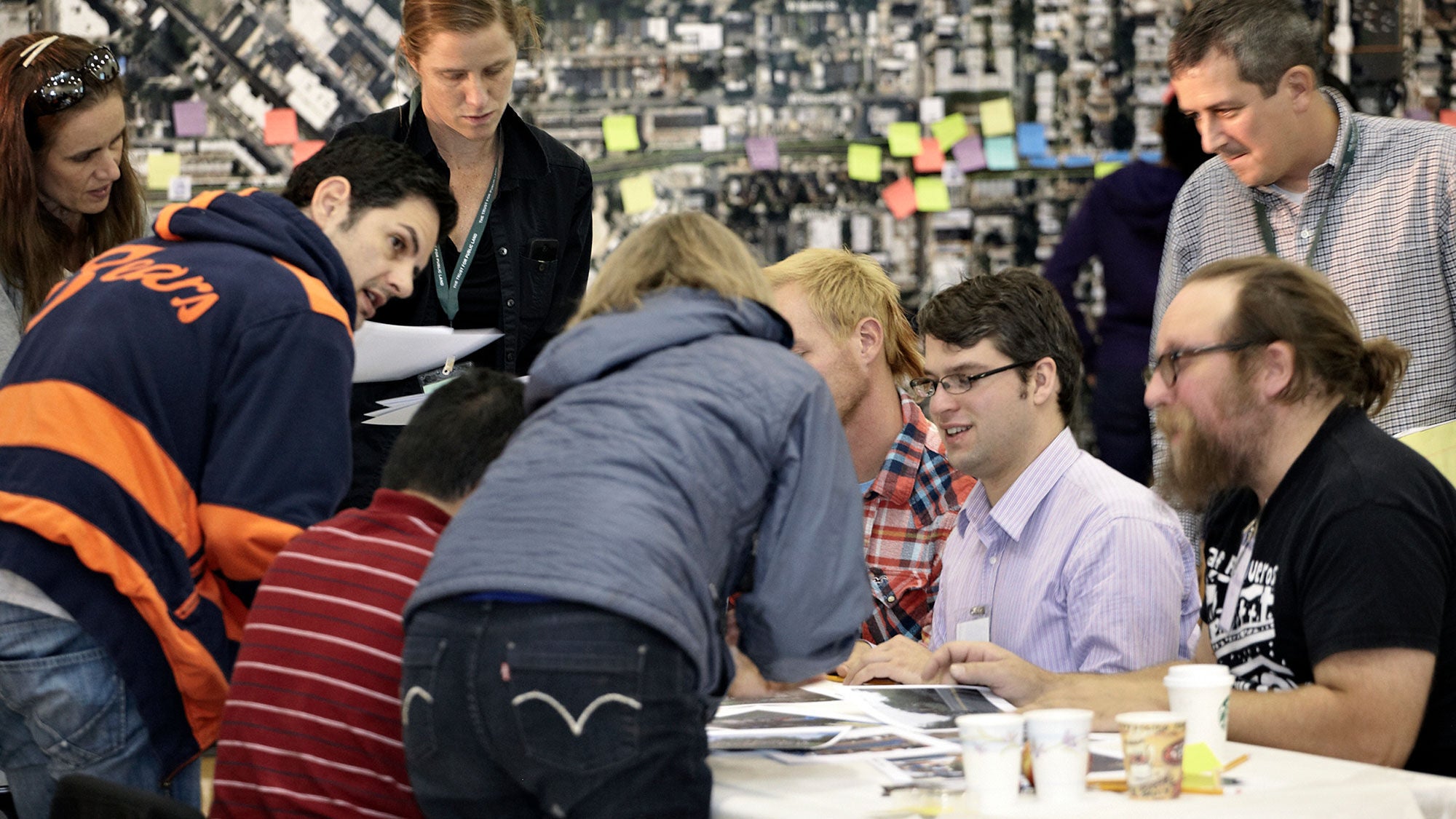 Carol, her team, and project partners convened charrettes where community members could help shape the Bloomingdale Trail. Credit Kate Joyce Studios
Like the Riverwalk, the 606 turns an unloved Chicago artery into a beloved community attraction — with the help of the “People’s Architect” and 5,000 tons of Amrize materials.
With street-level trains causing dozens of deaths per year in the late 1800s, Chicago elevated its rail lines. These embankments were designed to keep people out. A century later, Carol and her team would be figuring out how to let them in as they helped turn the Bloomingdale Line into an elevated park.
Collaborating with numerous partners, including landscape architects Michael Van Valkenburgh Associates, Carol led the community engagement for what would become the 606 and its path, the Bloomingdale Trail. They began with a workshop at a local theater. They ended with a trail that deliberately passed by churches, schools, and parks, so kids could bike between them without touching a city street.
“It really brought the communities together,” Carol says. “It’s an in-my-backyard community, let’s-make-neighbors project.”
‘Materials make architecture possible’
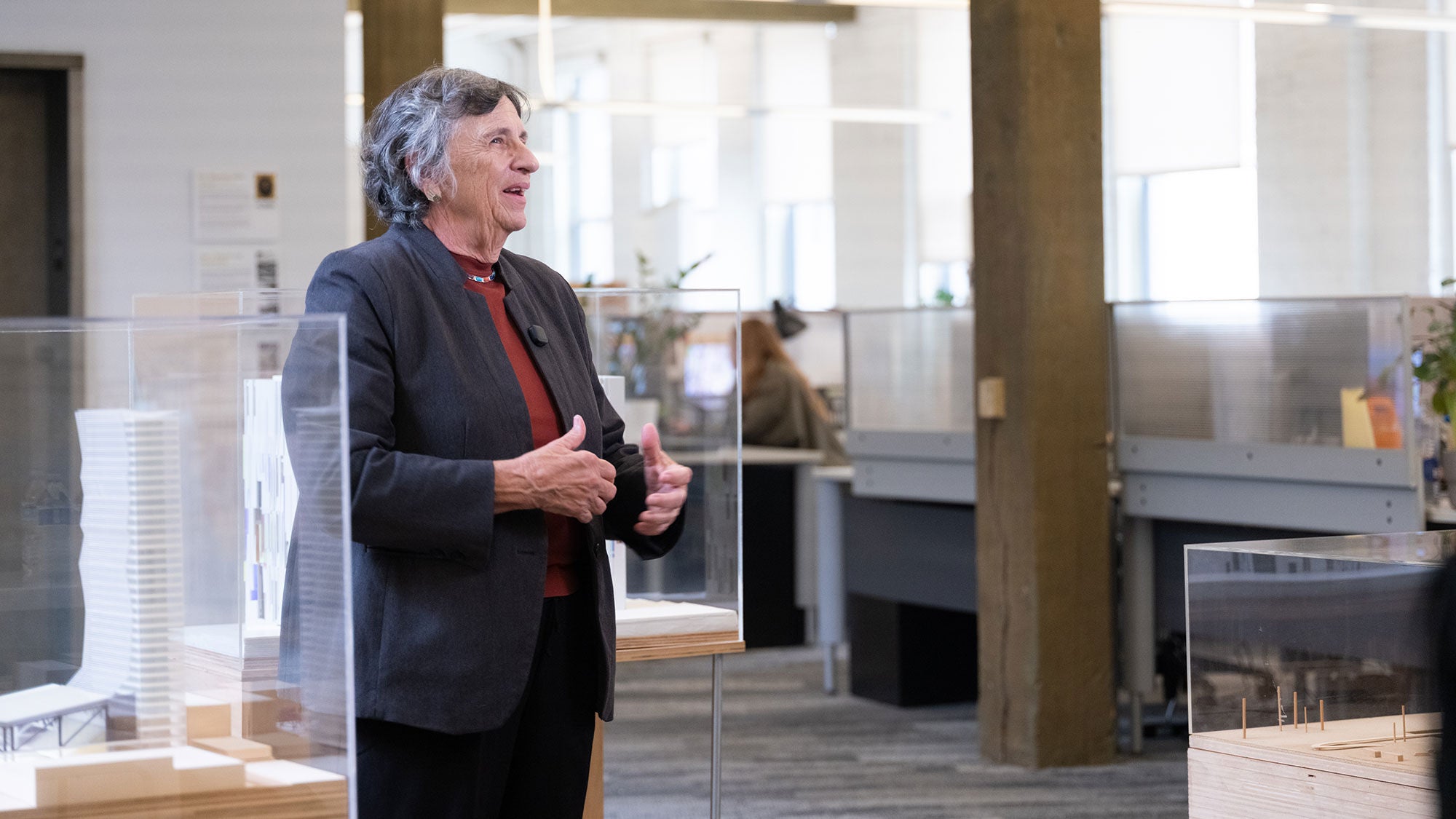 Carol broke a glass ceiling with her AIA Gold Medal win. She was the first living woman to win as an individual — rather than being in practice with another person.
In 2023, Carol became the first Chicagoan to win the American Institute of Architects Gold Medal since Mies van der Rohe more than 60 years earlier. She credits materials as part of Chicago’s architecture legacy — the steel frame that made the skyscraper possible, the terra cotta that fireproofed it, the concrete that pushed it higher.
“Materials are essential to architectural design; they make architecture possible,” Carol says. “I think the partnership between the architect and the creator of the materials has to continue. It has to be strengthened.”
As Nollaig puts it: “When Carol Ross Barney imagines civic spaces that bring people together, Amrize is there with the materials to make it real. That’s what we do. We build Chicago.”
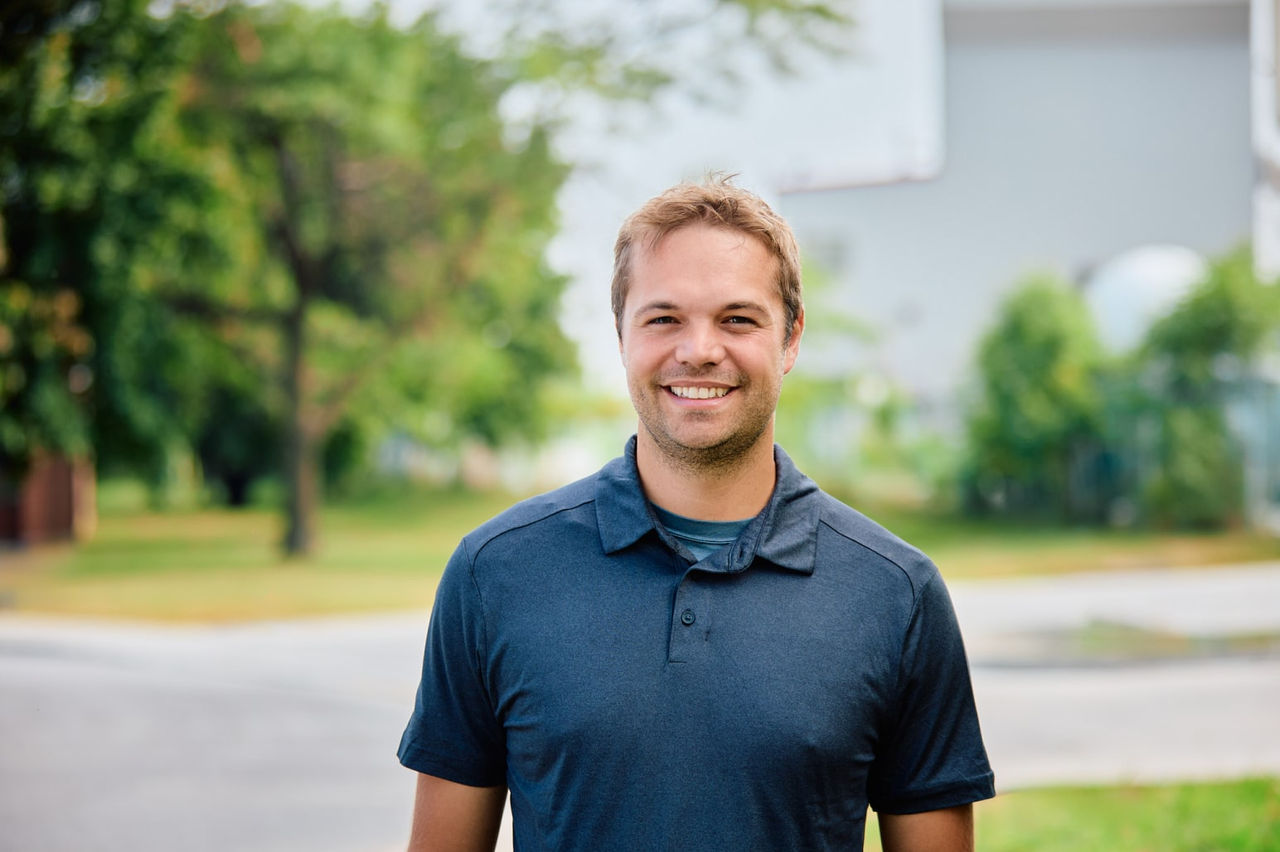
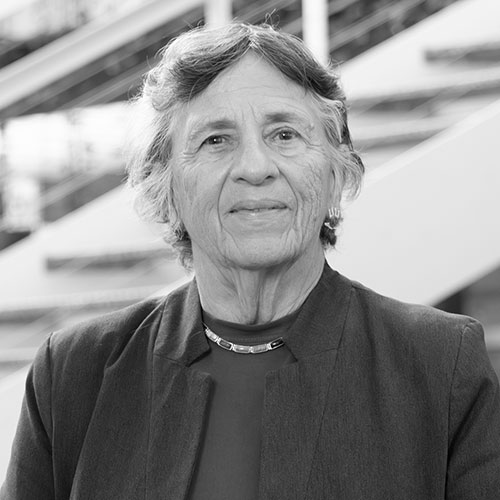
Meet the expert
Explore more from our Chicago Architectural Biennial partnership
The Skyline Maker: How SOM Keeps Reinventing the View at 90
SOM has long been defined by its marraige of architecture and engineering— from pioneering the glass curtain wall to designing the Burj Khalifa,
How Chicago Rose (and Endures) as an Architectural Capital
In 1871, the Great Chicago Fire consumed more than three square miles of the city in two days. It was a tragedy. It was also “a peculiar… positive.”
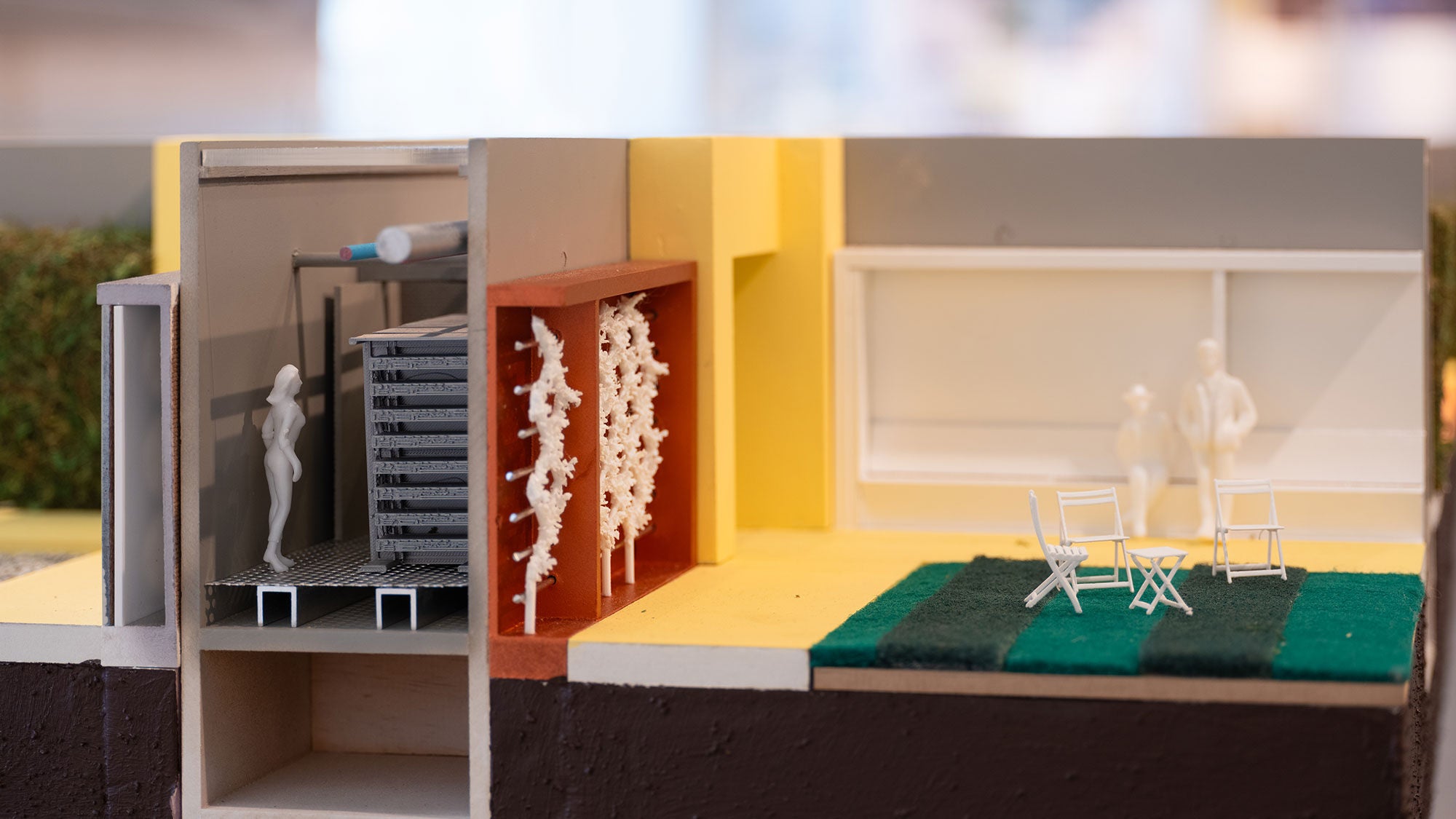
What if a Data Center Could Grow Food?
In this video collaboration with the CAB, we explore how data center might enrich our lives beyond the cloud.