



The Skyline Maker: How SOM Keeps Reinventing the View at 90
With its transparency, reflectivity, and lightness, One World Trade Center is an architectural landmark — as well as an engineering feat.
“The reality is that the base is blast-hardened. It’s a concrete box,” says Scott Duncan of Skidmore, Owings & Merrill (SOM), the firm that designed the Freedom Tower. “The glass louvers help to create an image of glistening beauty that conceals this function of protecting the base.”
Founded in 1936 by two architects and an engineer, SOM has long been defined by this marriage of architecture and engineering — from pioneering the glass curtain wall to designing the Burj Khalifa, the tallest building in the world.
In our latest CAB Voices video, produced in partnership with the Chicago Architecture Biennial, we explore what it means for SOM to still be learning after nine decades in practice.
Prototyping in public at the Chicago Architecture Biennial
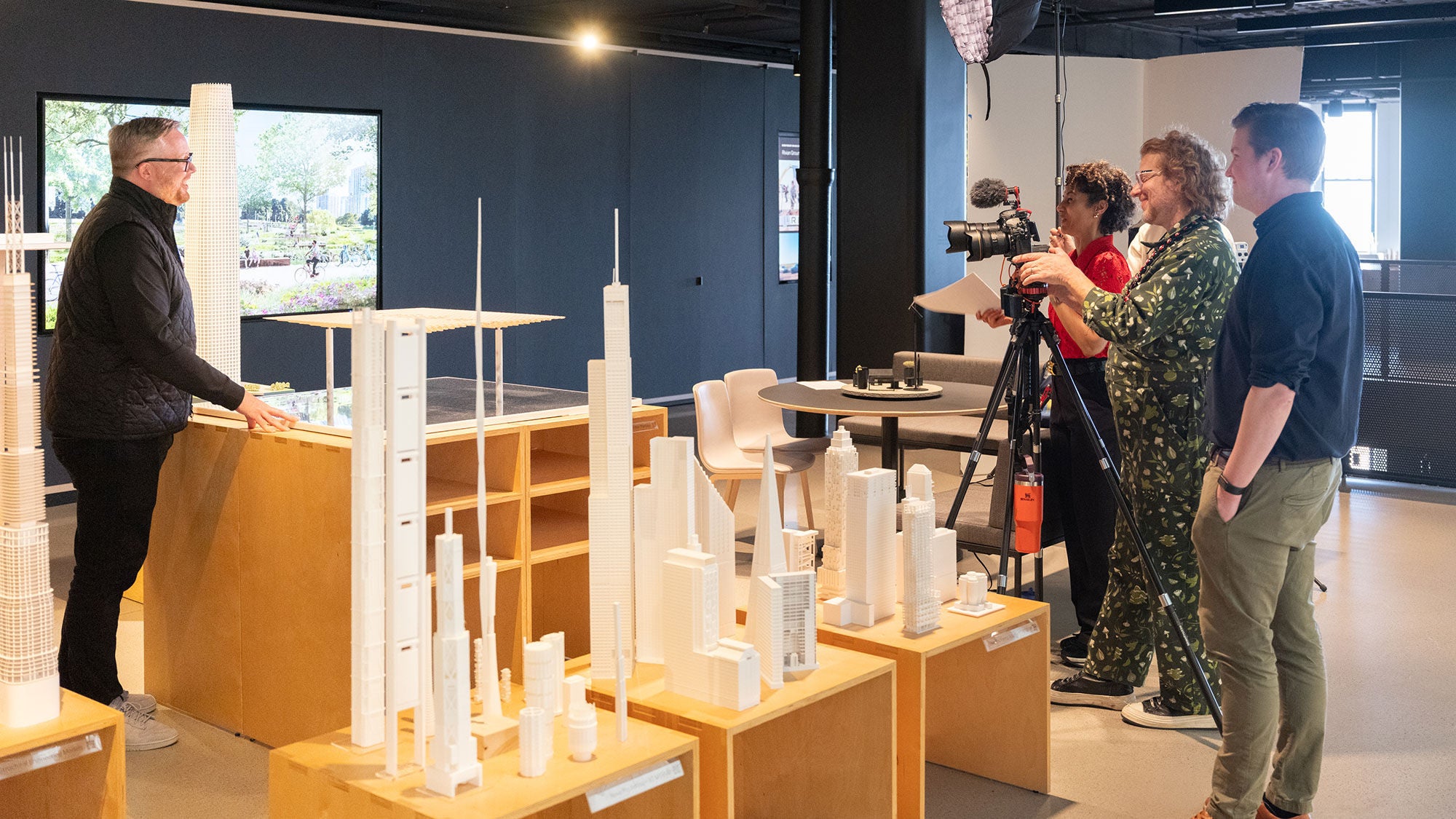 SOM Design Partner, Ryan Culligan, was interviewed at the SOM studio in Chicago, where the office is filled with architectural models from CAB exhibits to the Burj Khalifa.
Every two years, SOM uses the biennial to build exhibits that are “right on the edge of failure,” says SOM Design Partner Ryan Culligan — using robotic fabrication to cut a structure’s environmental footprint or waste materials to advance the circular economy. These experiments may not be ready for the jobsite yet. But in Ryan’s view, prototyping in public is how a 90-year-old firm stays ahead.
“One of the great privileges of my time at SOM is to work on projects at different scales that are consistently aimed at some version of transformation — of saying: this is how things are done, and let’s look at how they might be done differently.”
Designing for the skyline and for everyday life
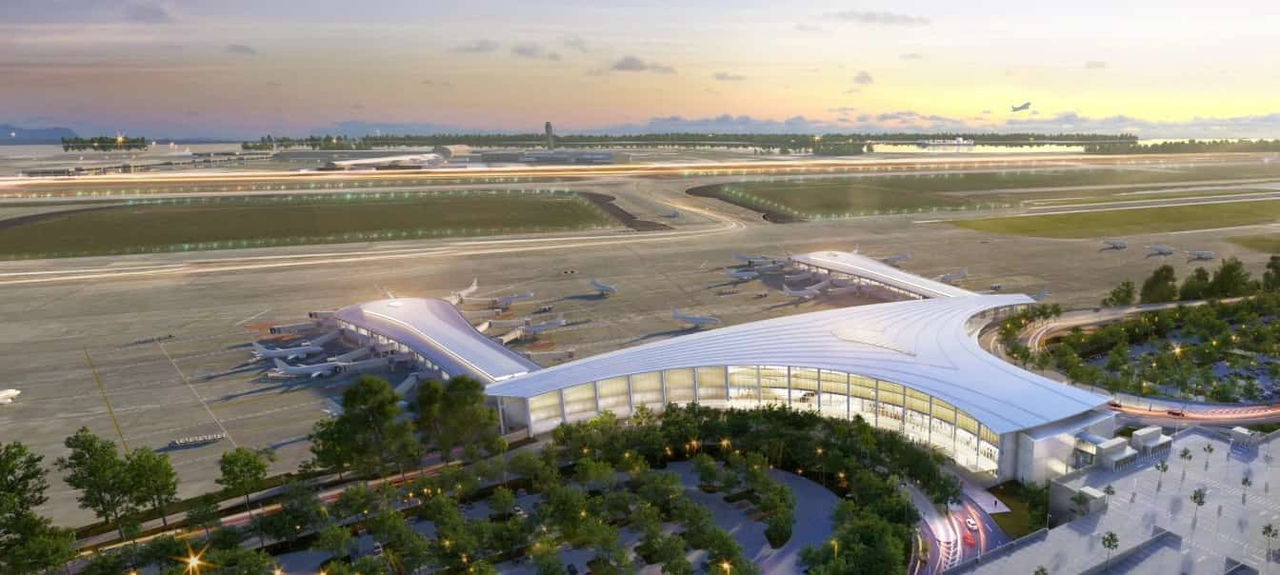
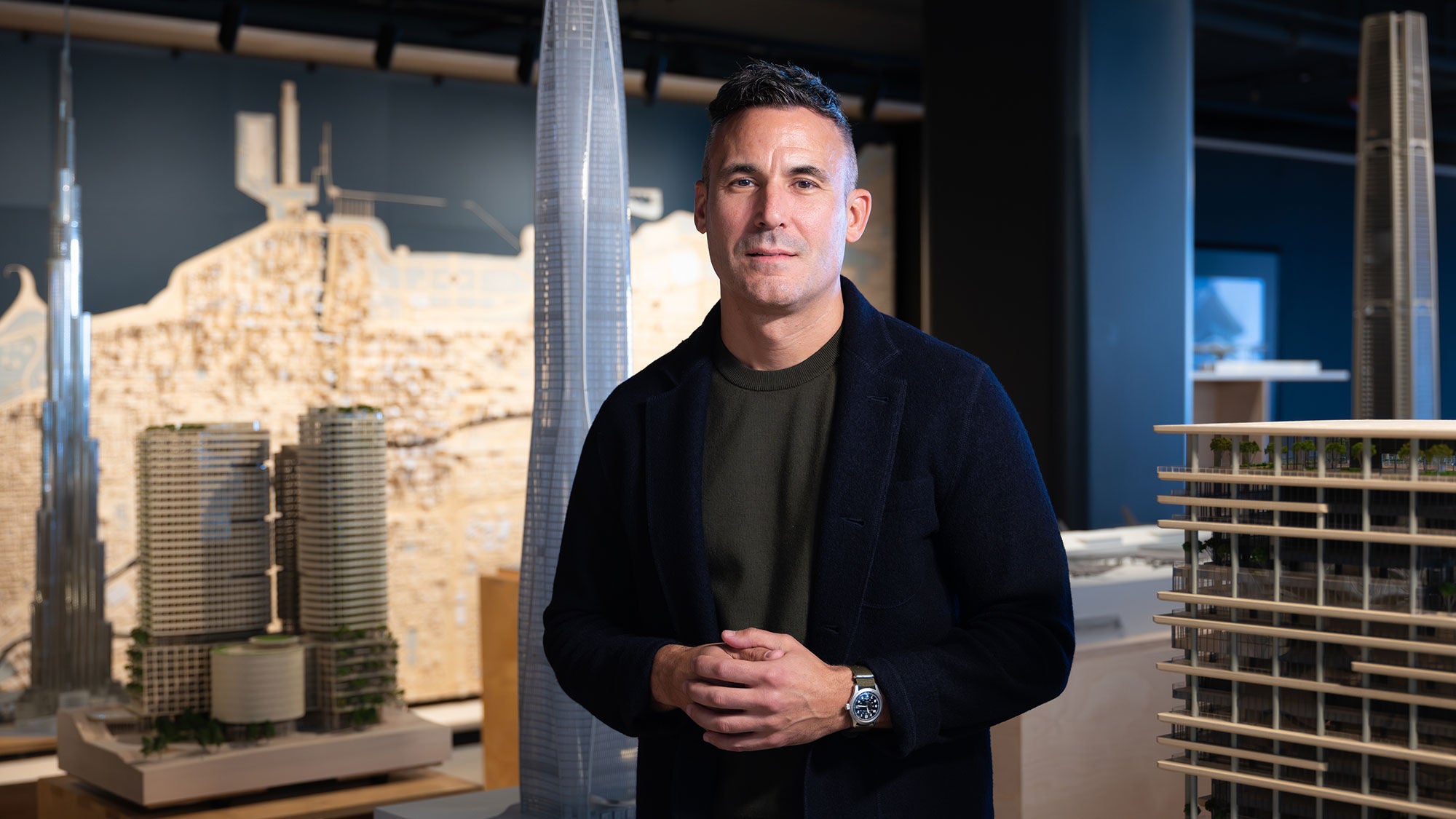 SOM Design Partner Scott Duncan stands among models showing the breadth of SOM’s work. Although known for skyline-defining structures, SOM also designs schools, health centers, airports, and many more community spaces.
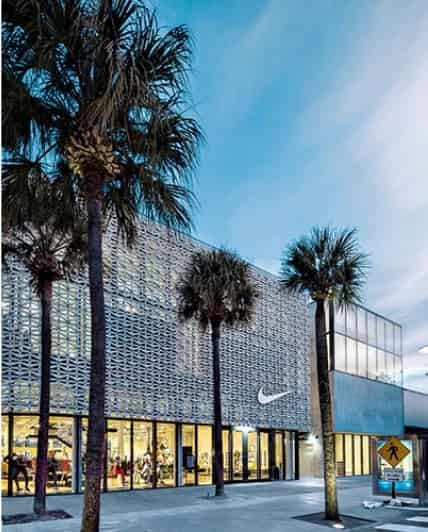
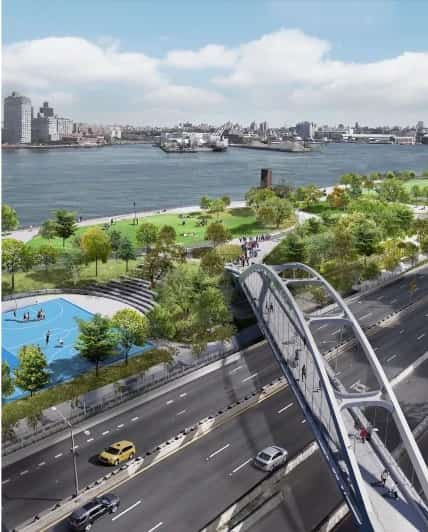
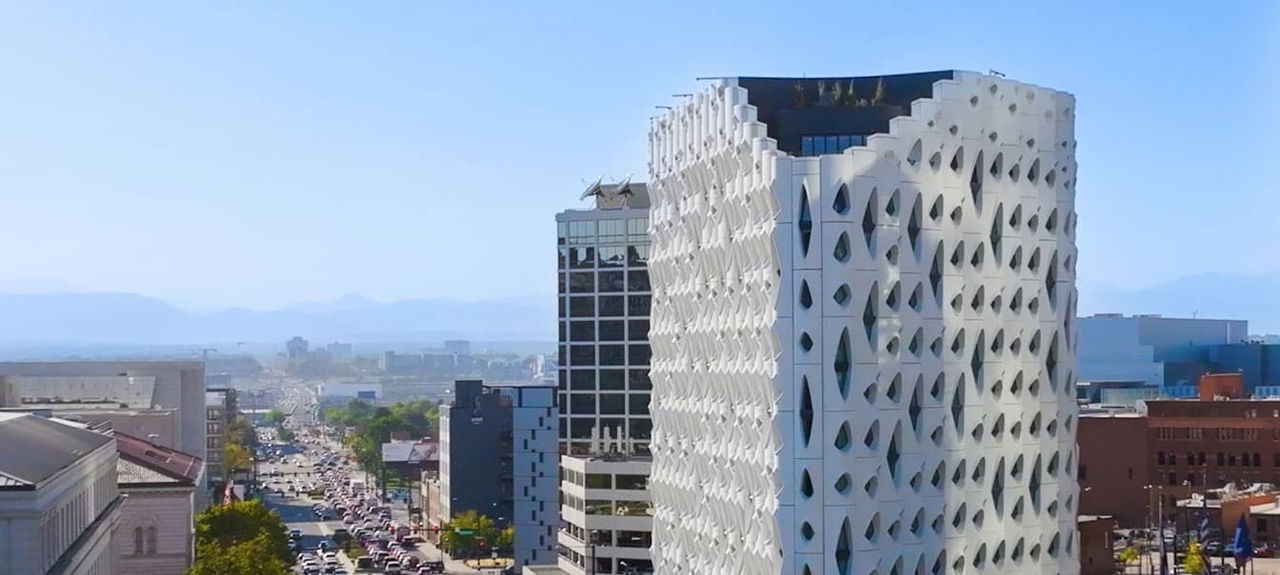
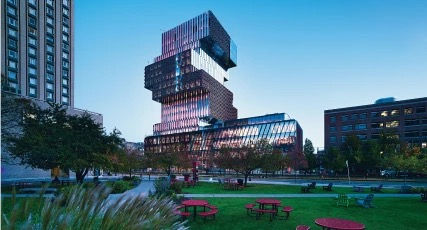
While SOM is known for the Willis Towers and John Hancock Centers of this world, the firm applies the same philosophy to more everyday spaces, like the Success Academy Bronx K-12 Campus and the New York City Public Health Laboratory — both built with Amrize materials.
“If you are laser-focused on how these buildings will be used and how they can make the day-to-day life of the folks that are using them better, you’re probably doing something right,” Ryan says.
Amrize supports SOM with advanced materials that help architects realize their vision. In One World Trade Center, that meant engineering uniquely strong concrete for the tower’s superstructure. “EVERtect high-performance concrete brings strength that has never been used on such a scale in building construction,” says Nollaig Forrest, Amrize’s Chief Marketing Officer. “We’re honored to be part of such an ambitious architectural vision that also stands for hope and progress.”
Heritage as a design driver
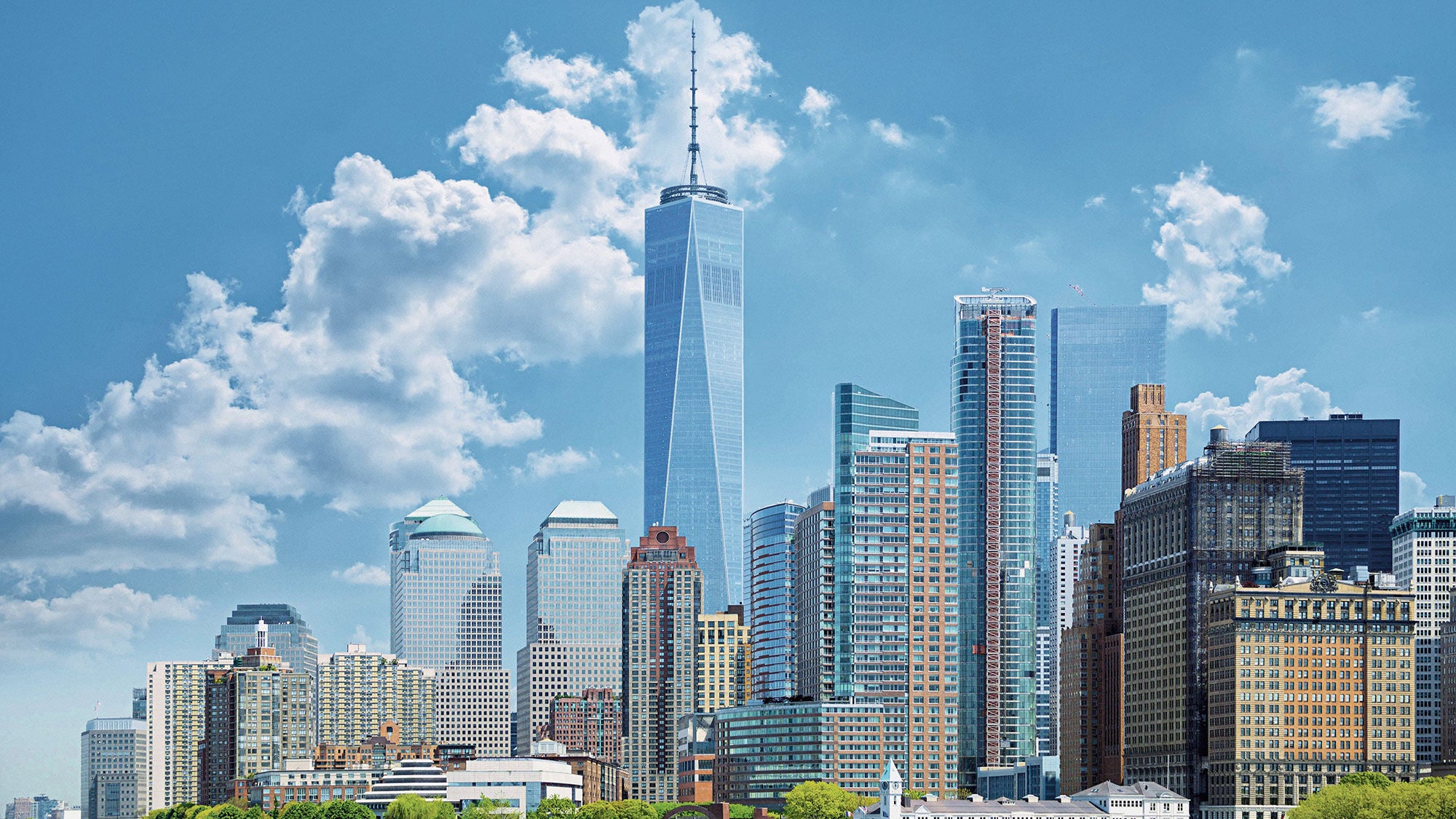 One World Trade Center rises above the Manhattan skyline. At exactly 1,776 feet (541.3 meters) high, it’s the tallest building in the Western Hemisphere.
“Anything we do in the built environment is effectively permanent,” Scott says, “so heritage is a major driver for how we approach design generally.”
After 90 years, that means avoiding what's trendy in favor of building what will last — and finding new ways to do it.
Meet the experts
Ryan Culligan, Design Partner, Skidmore, Owings & Merrill
Ryan joined SOM in 2009 as a design architect and has served as a design partner since 2025. He specializes in highly complex, large-scale projects, such as medical centers and airport terminals — always focusing on the experience of the people who inhabit his buildings.
Scott Duncan, Design Partner, Skidmore, Owings & Merrill
Scott has been at SOM since 1998 and currently serves as design partner. An expert in using an interdisciplinary approach to solve complex design challenges, Scott has led projects spanning from the Shenzhen headquarters of WeBank to the expansion of Terminal 2 at O'Hare Airport.
Explore more from our Chicago Architectural Biennial partnership
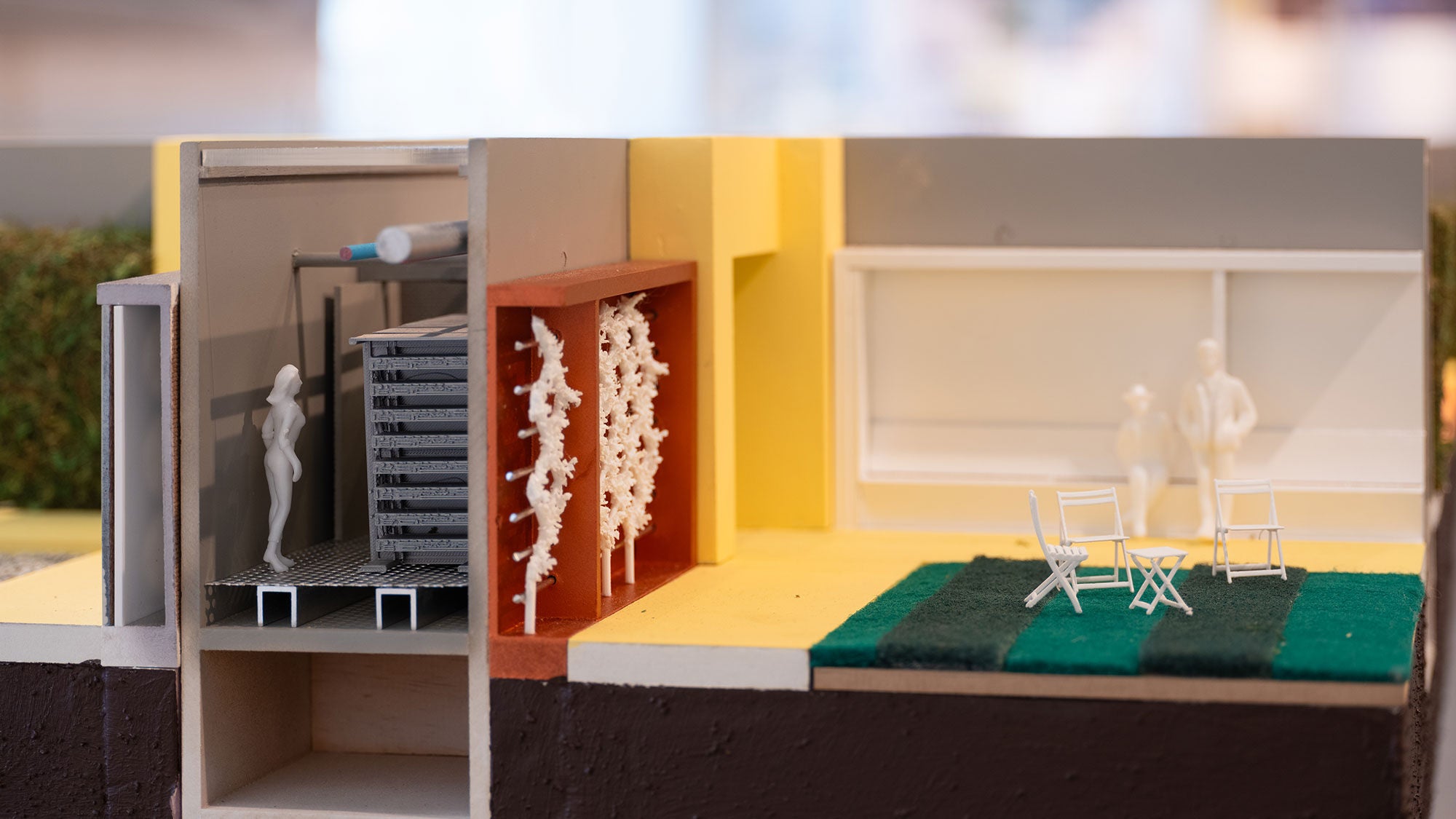
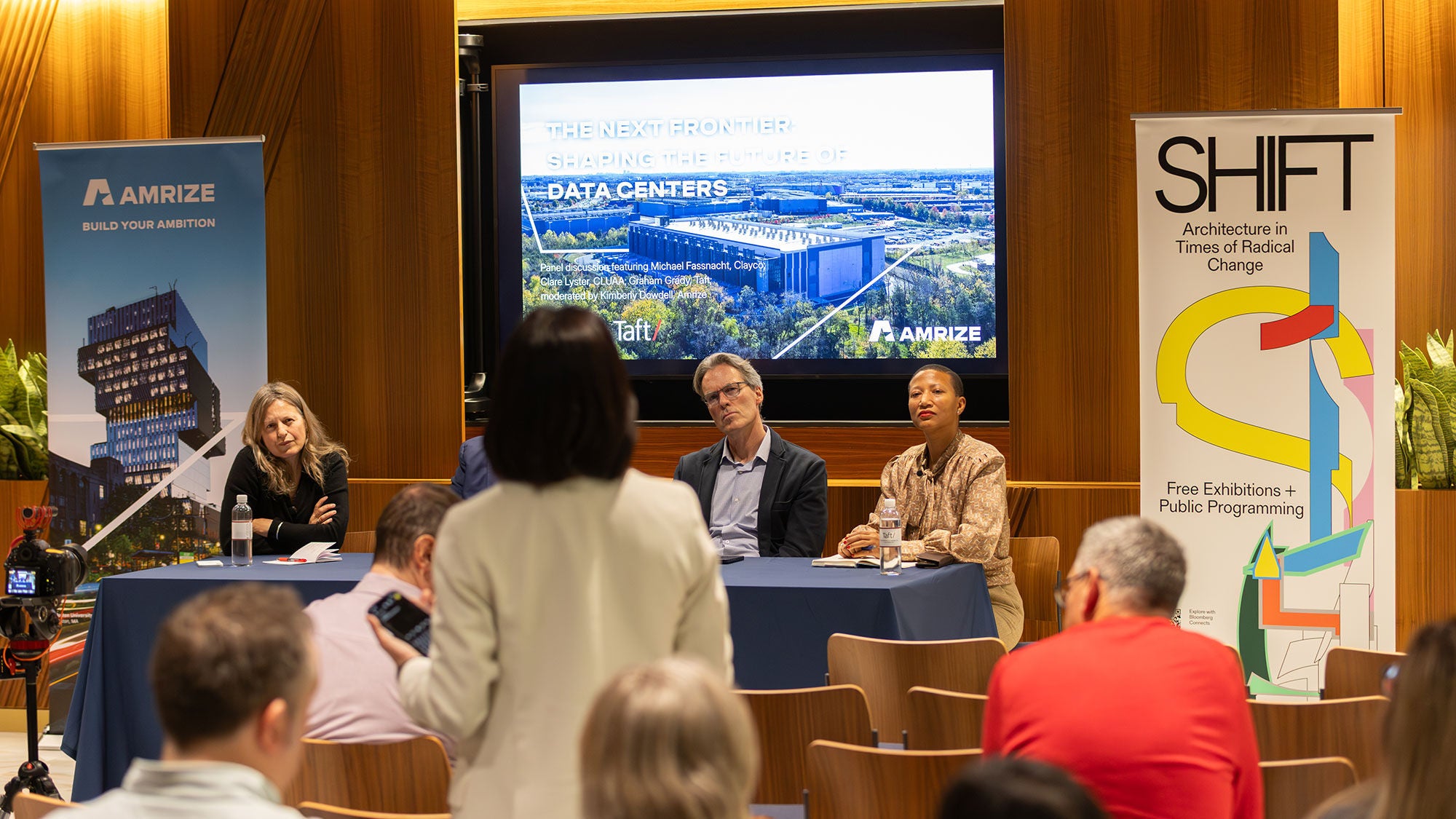
Reimagining the Data Center
In this video collaboration with the CAB, we ask “what if” data centers could enrich our lives beyond the cloud?
How Chicago Rose (and Endures) as an Architectural Capital
In 1871, the Great Chicago Fire consumed more than three square miles of the city in two days. It was a tragedy. It was also “a peculiar… positive.”
See More Architecture Stories
From the Chicago Architecture Bienniel to the New American Home and icons of design.