







Home Run! The Building Envelope Solutions Giving Ballparks a Winning Season
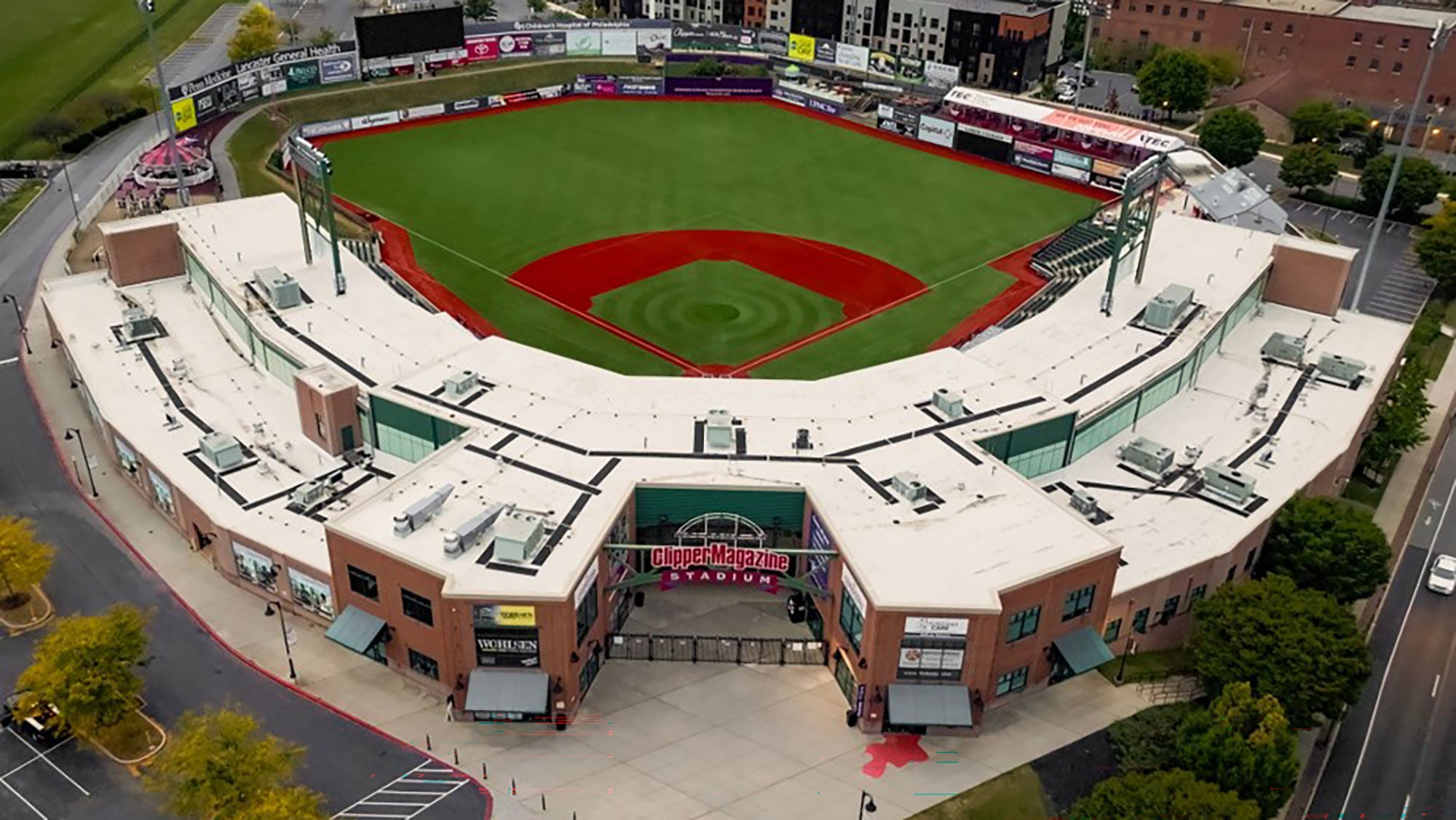 Penn Medicine Park is home to the Lancaster Stormers (formerly the Lancaster Barnstormers) of the professional independent Atlantic League.
Recover or construct — Amrize backed two different answers in recent projects. A 20-year-old roof at Penn Medicine Park was failing just as the playoffs began. A brand-new podium deck at Fifth Third Park had to survive its first Carolina summer.
- In Lancaster, PA, Moser Roofing Solutions replaced a 20-year-old failing roof at Penn Medicine Park with a Duro-Tuff® roof-over system, avoiding a full tear-off.
- That project finished two weeks ahead of schedule and under budget, backed by a 20-year NDL warranty.
- In Spartanburg, SC, Foam Insulation Company sprayed more than 50,000 square feet of Enverge® OnePass closed-cell foam to the underside of Fifth Third Park's concrete podium deck.
- OnePass can be applied up to four inches per pass, letting crews reach the specified thickness in fewer passes than a standard closed-cell product would require.
Like being a pro baseball player, renovating a baseball stadium means performing in public. The contractor doesn’t get to move opening day. The schedule is closely watched. The roof or deck needs to do its job in front of thousands of people who will absolutely notice if it doesn’t.
Two recent projects show how building America’s pastime is anything but leisure. In Lancaster, Pennsylvania, Moser Roofing Solutions had to replace a two-decade-old roof without interrupting the season. In Spartanburg, South Carolina, Foam Insulation Company needed to protect the podium decking (and the fans who walk on it) from the climate’s moisture and heat.
Here’s how, with help from Amrize, these pros hit a home run for energy efficiency, weather-proofing, and durability that endures season after season.
When is a roof-over better than a tear-off?
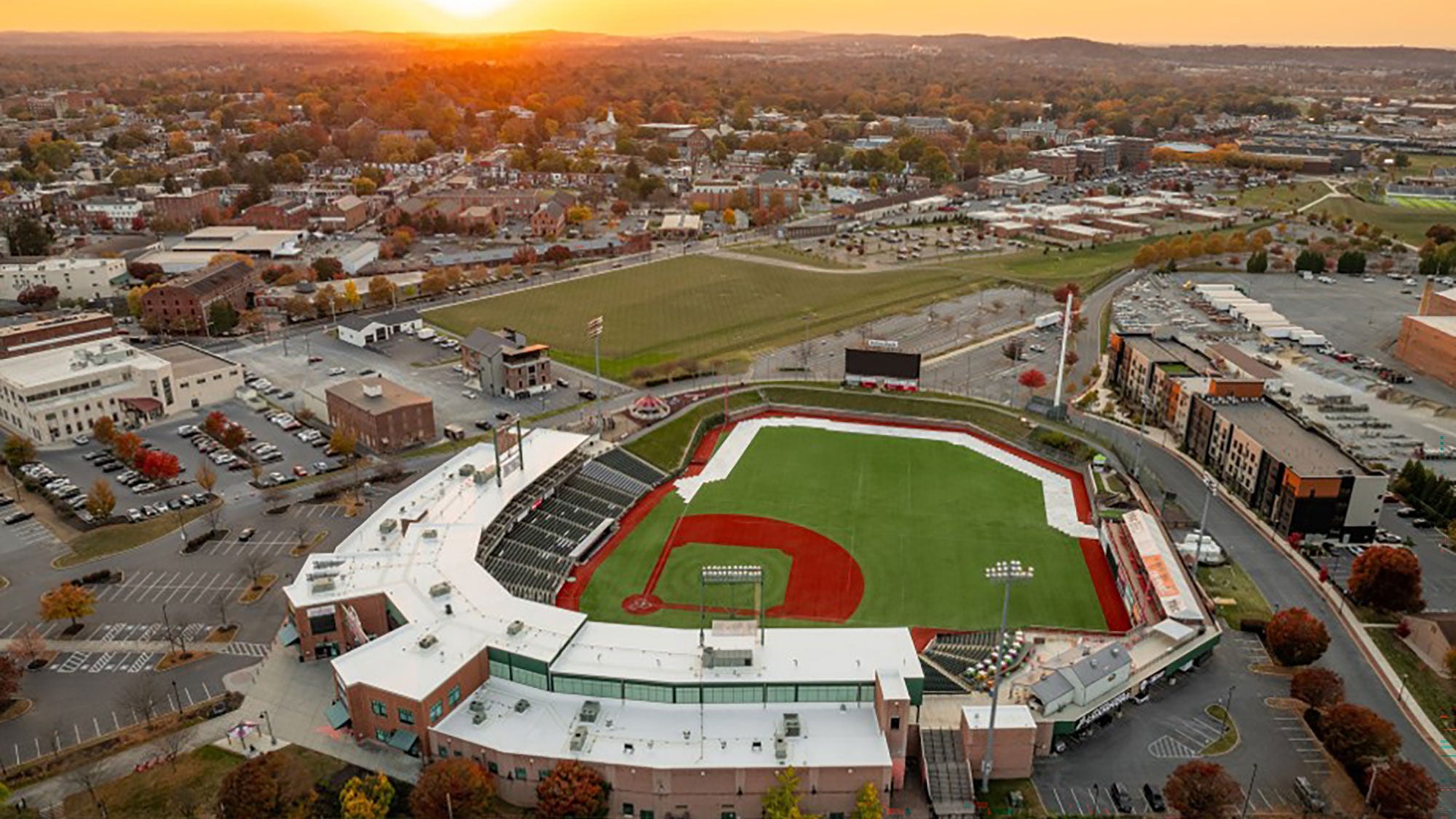 Penn Medicine Park seats over 6,000 fans and up to 7,500 total, including the lawn area.
When you need to replace a failing roof system without taking the building offline, a roof-over may be the answer—as it was for the Lancaster Stormers.
For these Atlantic League of Professional Baseball members, Moser Roofing Solutions was a home team. The crew had serviced their ballfield—Penn Medicine Park—since 2019 and had watched it near retirement with wind-related detachment, leaks, and a TPO roof that had passed the 20-year-mark.
That familiarity influenced the decision that followed. Rather than tearing everything off and starting over, the team chose a roof-over. By installing a new roof system directly over the old one, the ISO insulation could be preserved, cutting the cost and amount of debris coming off the building. It also meant the facility kept hosting games without exposing fans to the weather.
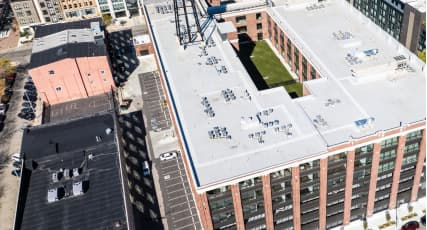
Moser installed more than 69,000 square feet of Duro-Tuff® 50 mil white and Duro-Last® 40 mil white membrane over a Duro-Weave® slipsheet that separates the new roof from the old TPO. The white pigment offers high reflectivity to cut heat absorption—helping limit indoor temperatures through a Pennsylvania summer with thousands of fans in the building.
The clock was running. The roof needed replacing right as the Stormers were entering their playoff and championship run. That meant the crew was working in a live, in-season venue with games that could not be rescheduled to accommodate it. Moser kept the process largely hands-off for the team—bringing daily progress reports and invitations to inspect the site so they didn’t have to chase down information.
The result? The project finished a couple of weeks ahead of schedule and under budget, backed by a 20-year NDL warranty. Fans would have been blissfully unaware: like a skilled umpire, a great roof that’s doing its job well barely gets noticed.
What are the benefits of spray foam insulation in hot climates?
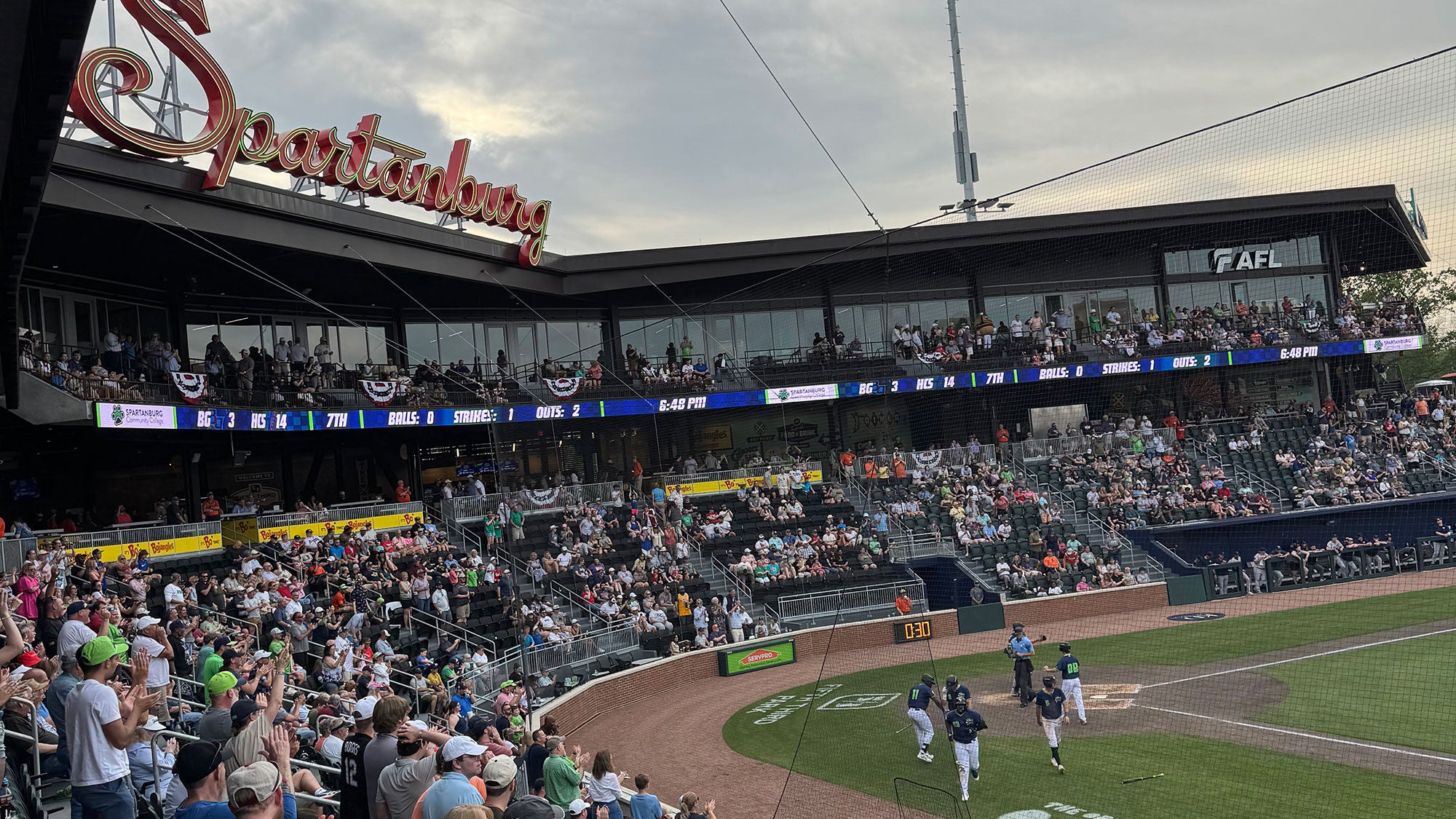 Fifth Third Park is Home to the Spartanburgers, a playful name that combines the demonym for residents of Spartanburg with the city's local food and railroad history
A concrete deck can become a thermal barrier and moisture liability, particularly in hot and humid conditions. Spray foam can prevent that.
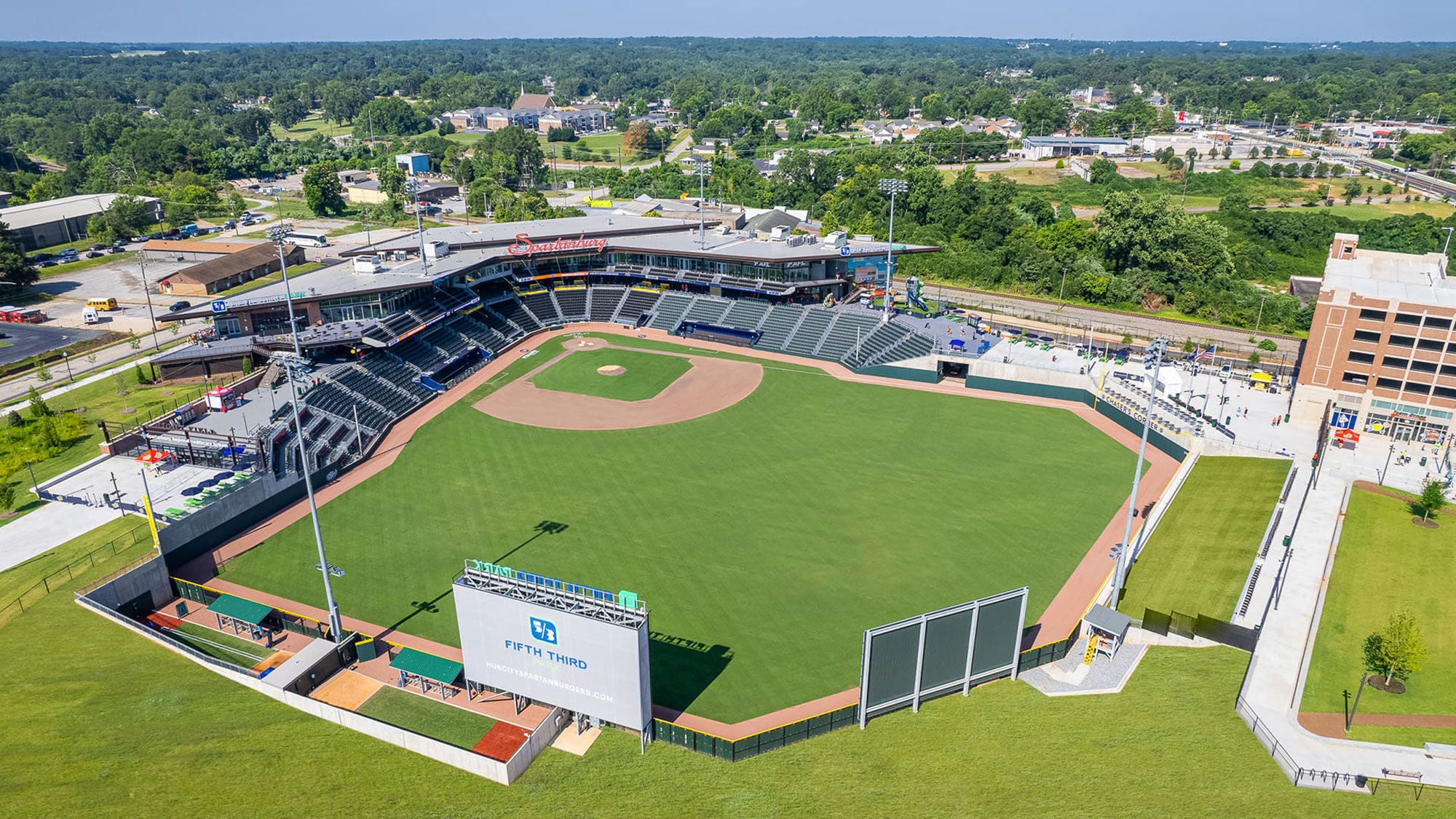
If Penn Medicine Park is a veteran, Fifth Third Park, home of the Spartanburgers, is a rookie. This brand-new minor league stadium didn’t have years of deterioration to overcome. But it did have South Carolina’s climate.
The podium decking, which provides both a fan surface and an operations roof, was made of concrete. Concrete is dense and structurally useful, but it lacks insulating capability. On its own, concrete conducts heat readily, creating a thermal bridge between spaces that need very different conditions. Left untreated, that bridge invites in moisture.
Foam Insulation Company addressed the heat conduction when constructing the park by spraying more than 50,000 square feet of Enverge® OnePass closed-cell spray foam to the underside of the concrete podium decking. Applying the foam directly to the deck creates a combined thermal and moisture barrier without sacrificing floor height or limiting the finishes that could be used above. It also protects the concrete itself from temperature swings and moisture exposure that degrade structural performance over time.
OnePass® was selected for three properties in particular: a high R-value per inch, air-sealing performance, and moisture resistance. It also sprays up to four inches per pass, which lets the crew build the specified thickness in fewer passes than would be required for a standard closed-cell product. And being a single spray-applied system, it integrates insulation, air sealing, and moisture resistance in one step, reducing trades, sequencing risk, and places for the assembly to fail at a seam. Mold, mildew, and other moisture-related concerns begone.
Does Amrize do repair & refurbishment as well as new builds?
 The stadium's signature Burger Bar offers 102 toppings (allowing for 9 nonillion combinations!)
Amrize serves every construction market, including new builds across commercial, residential, infrastructure, and repair & refurbishment.
These projects demonstrate that breadth. One stadium is part of an established baseball tradition. The other is helping create a new one. They reflect two situations many building envelope projects fall into: extending the life of something that already exists, or getting new construction right before it’s tested on game night.
Either way, the purpose is the same: creating places where people can come together — unaware of the thousands of decisions, countless hours, and decades of expertise that went into making their venue. The best building envelope is the one that does its job out of the spotlight, so everyone inside can focus on the game and the people they're sharing it with.
Frequently asked questions about building envelopes
What is a roof-over, and when is it used instead of a full tear-off?
A roof-over installs a new roofing system directly above an existing one, rather than removing it first. Contractors typically choose it when the underlying insulation is still sound, and the building needs to stay operational, since it reduces cost, debris, and downtime compared with a full tear-off — the approach Moser Roofing Solutions used at Penn Medicine Park.
What does a 20-year NDL warranty actually cover?
NDL stands for "no dollar limit." Instead of capping repair costs at a fixed amount, an NDL warranty covers the full cost of materials and labor for its term if the system fails. The Duro-Tuff® system installed at Penn Medicine Park carries a 20-year NDL warranty.
What's the difference between closed-cell and open-cell spray foam insulation?
Closed-cell foam has a denser structure, giving it a higher R-value per inch, added rigidity, and near-zero water absorption — which is why it's specified for exposed, moisture-prone applications like the underside of a concrete podium deck. Open-cell foam is lighter and less expensive, but permeable to moisture, making it a weaker fit for that use.
What is a thermal bridge, and why does it matter in stadium construction?
A thermal bridge is a point in a building where heat passes through more easily than the surrounding structure — typically because a material like concrete conducts heat far more readily than insulation does. Left untreated, it drives up cooling costs and invites moisture problems, which is the issue Fifth Third Park's design addressed with spray foam.
Does a roof-over cost less than a full tear-off and replacement?
Generally, yes. A roof-over avoids the cost of removing and disposing of the existing system and reinstalling insulation underneath it, which is a major share of a full replacement's cost. The total still depends on the project's scope and the condition of the existing roof.