
Spanning the U.S. and Canada: How Amrize Helped Build the Gordie Howe International Bridge
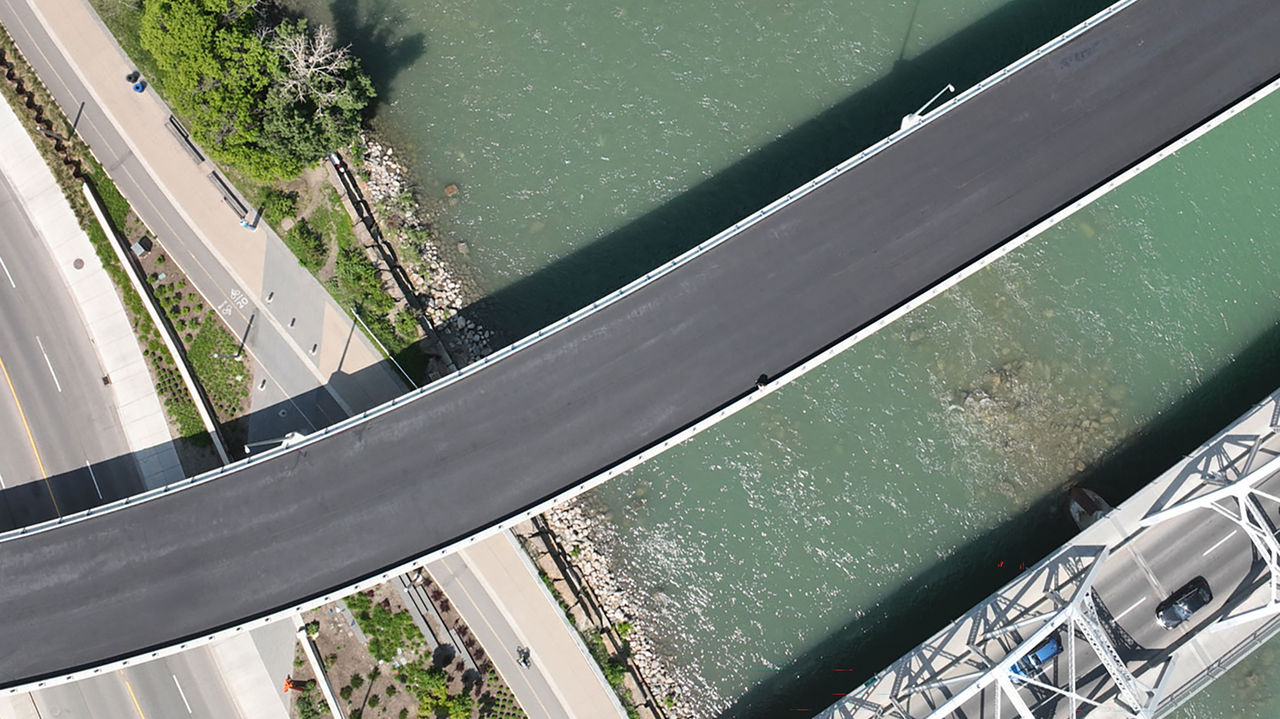
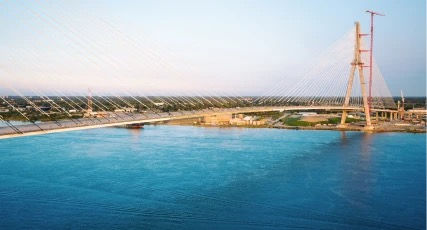
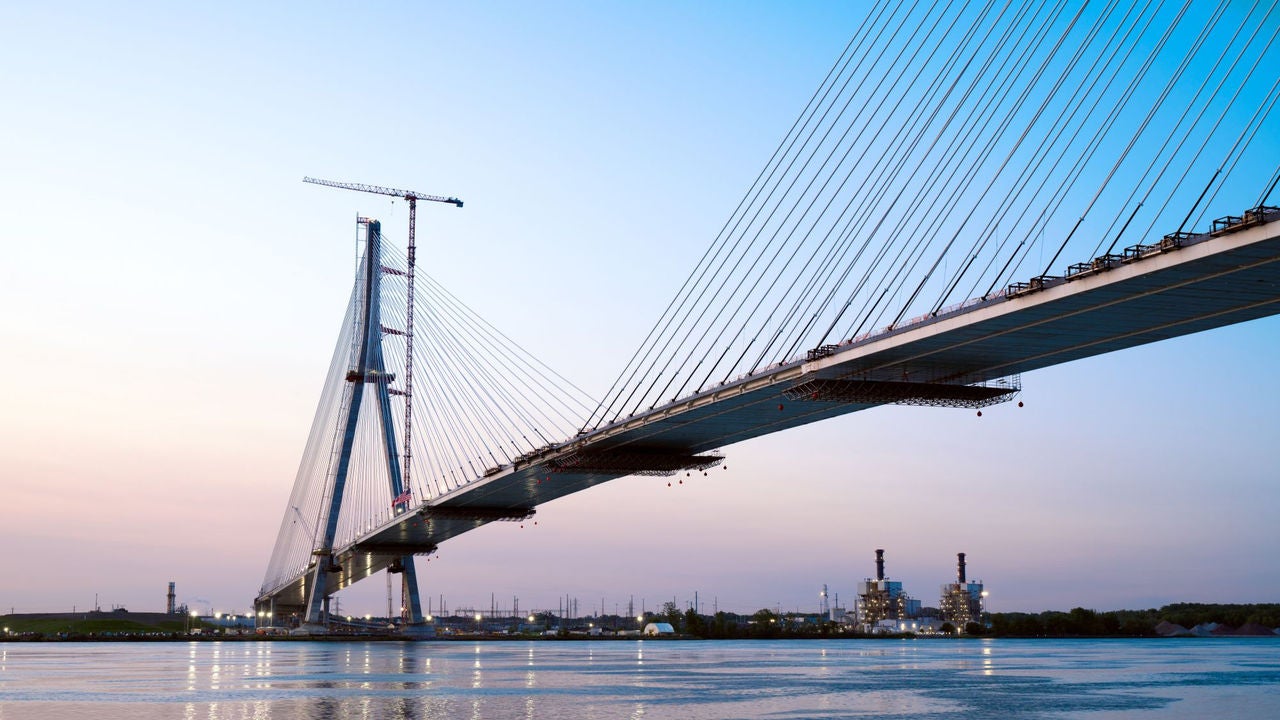 The Gordie Howe International Bridge connects Detroit, Michigan, and Windsor, Ontario, across the Detroit River.
Project at a glance
- Location: Detroit, Michigan, and Windsor, Ontario
- Project Type: Infrastructure
- Opening date: July 27, 2026
- Amrize Solution: Custom cement blends, including OneCem, slag cement, and silica fume
- Key Partners: Bridging North America, SRM Concrete, and Windsor-Detroit Bridge Authority
In brief
For nearly a century, almost everything moving between Detroit, Michigan, and Windsor, Ontario, had to funnel through a single span: the Ambassador Bridge. But that bridge was built for a different era. As cross-border trade and travel grew, congestion became a daily reality. Long lines of idling trucks, delayed commuters and backed-up freight slowed the movement of people and goods across one of North America’s busiest international crossings.
The Gordie Howe International Bridge was built to change that. Designed with future growth in mind, the new crossing aims to absorb 50 to 60% of the Ambassador Bridge’s traffic — creating a more efficient route for the hundreds of millions of dollars in goods that cross the border each day. Beyond reducing congestion, the bridge should strengthen supply chains, improve reliability for cross-border commerce, and create a smoother experience for travelers between Canada and the United States.
“The Gordie Howe International Bridge is more than a physical connection; it symbolizes a shared commitment for sustainable infrastructure to promote economic development, active transportation, tourism, and cultural exchange.”
Here’s how the longest cable-stayed bridge span in North America came to connect two countries.
The challenge: Bridging codes, specs — and a mid-project pivot
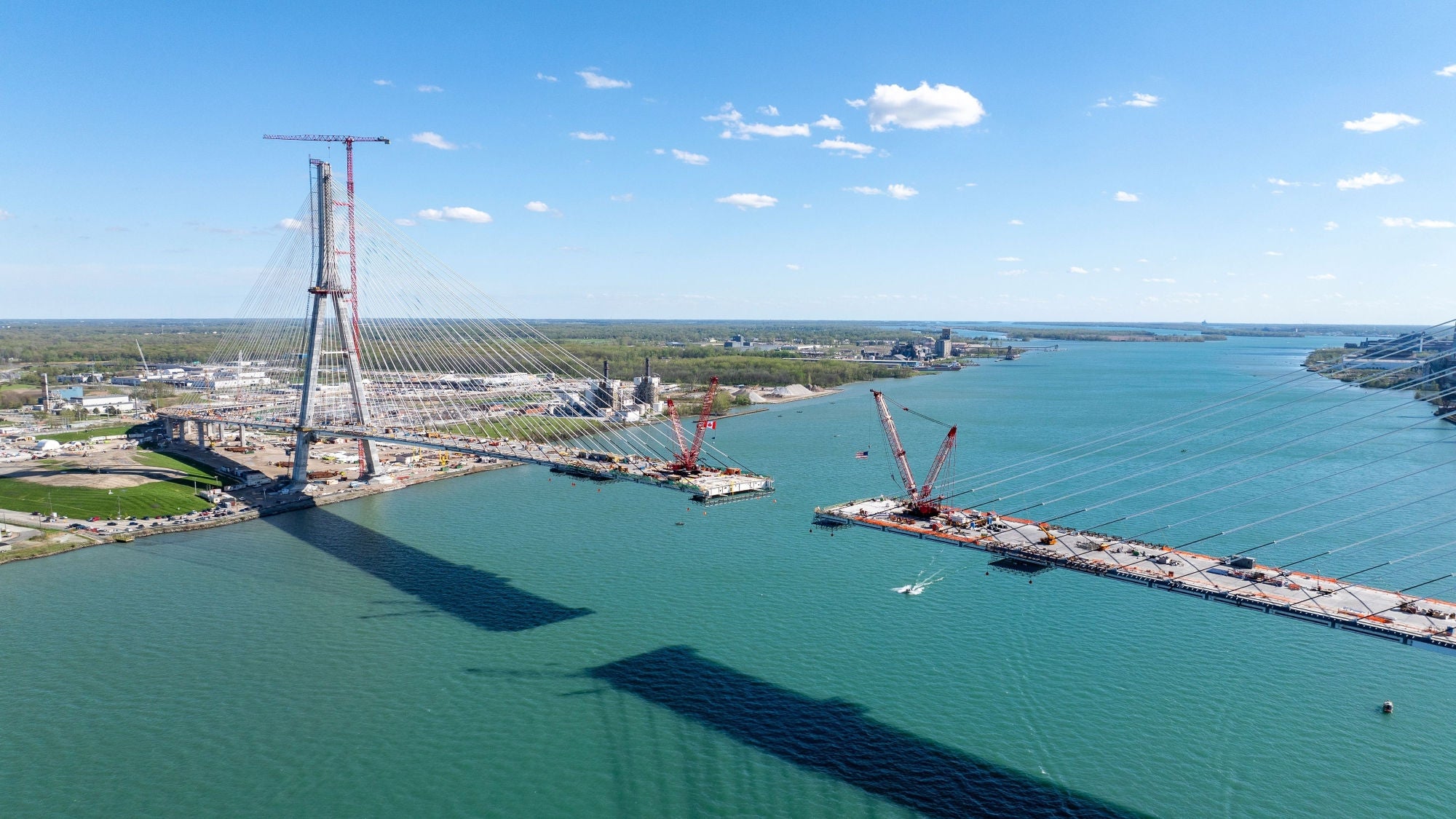
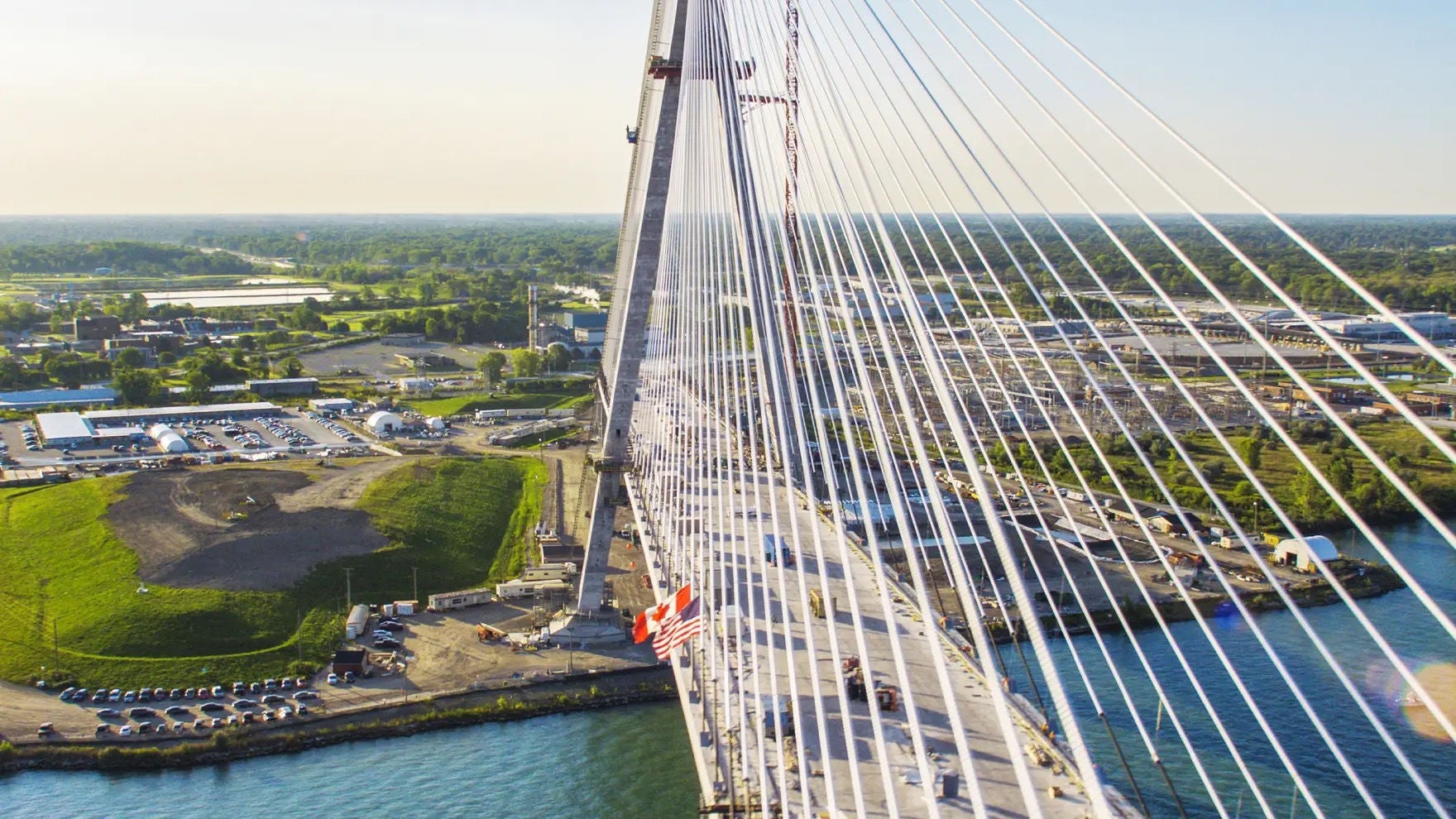 Reaching over 700 feet (200 meters), the bridge towers in Detroit and Windsor add a new feature to the skyline on both sides of the river.
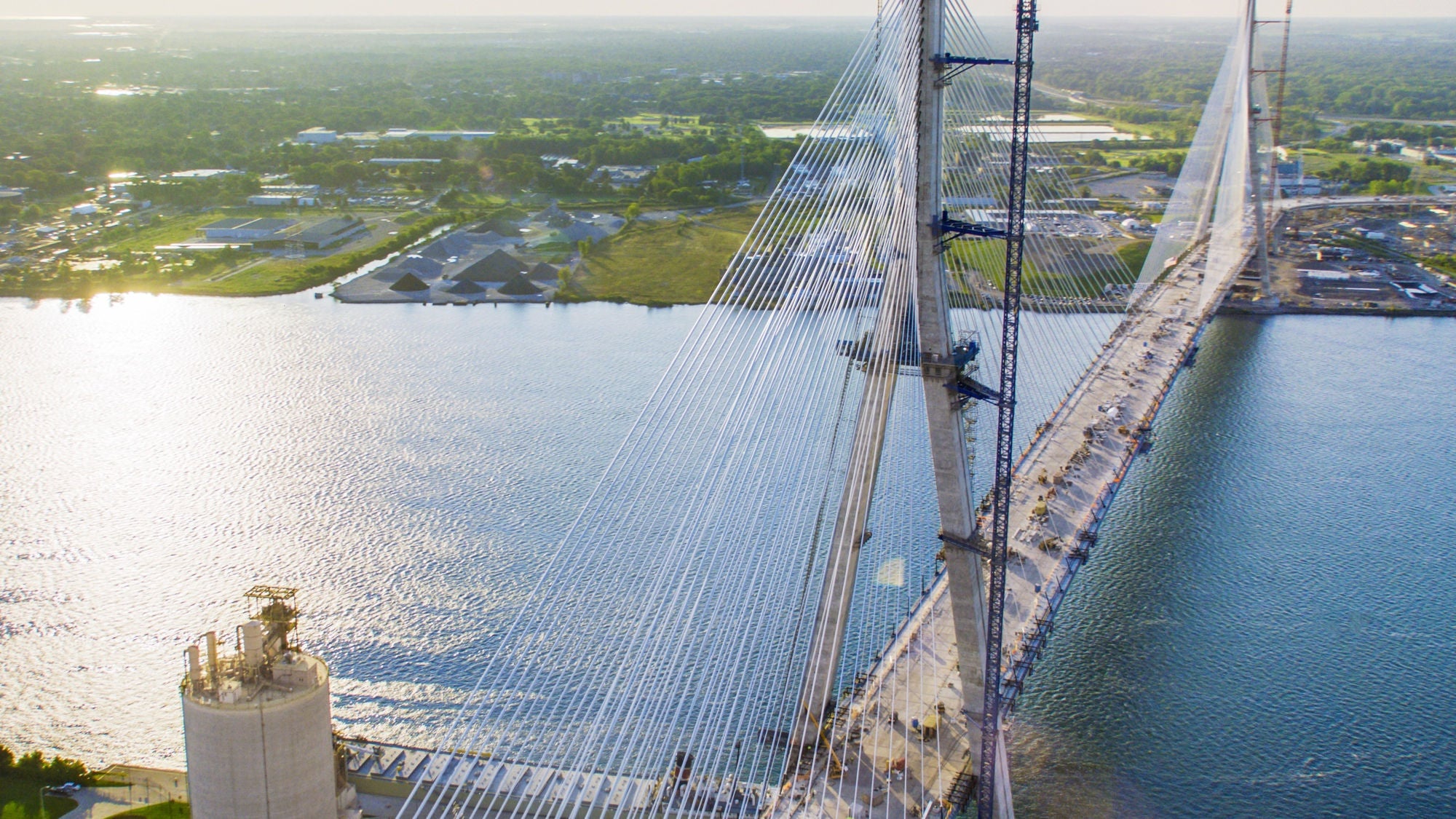 Reaching over 700 feet (200 meters), the bridge towers in Detroit and Windsor add a new feature to the skyline on both sides of the river.
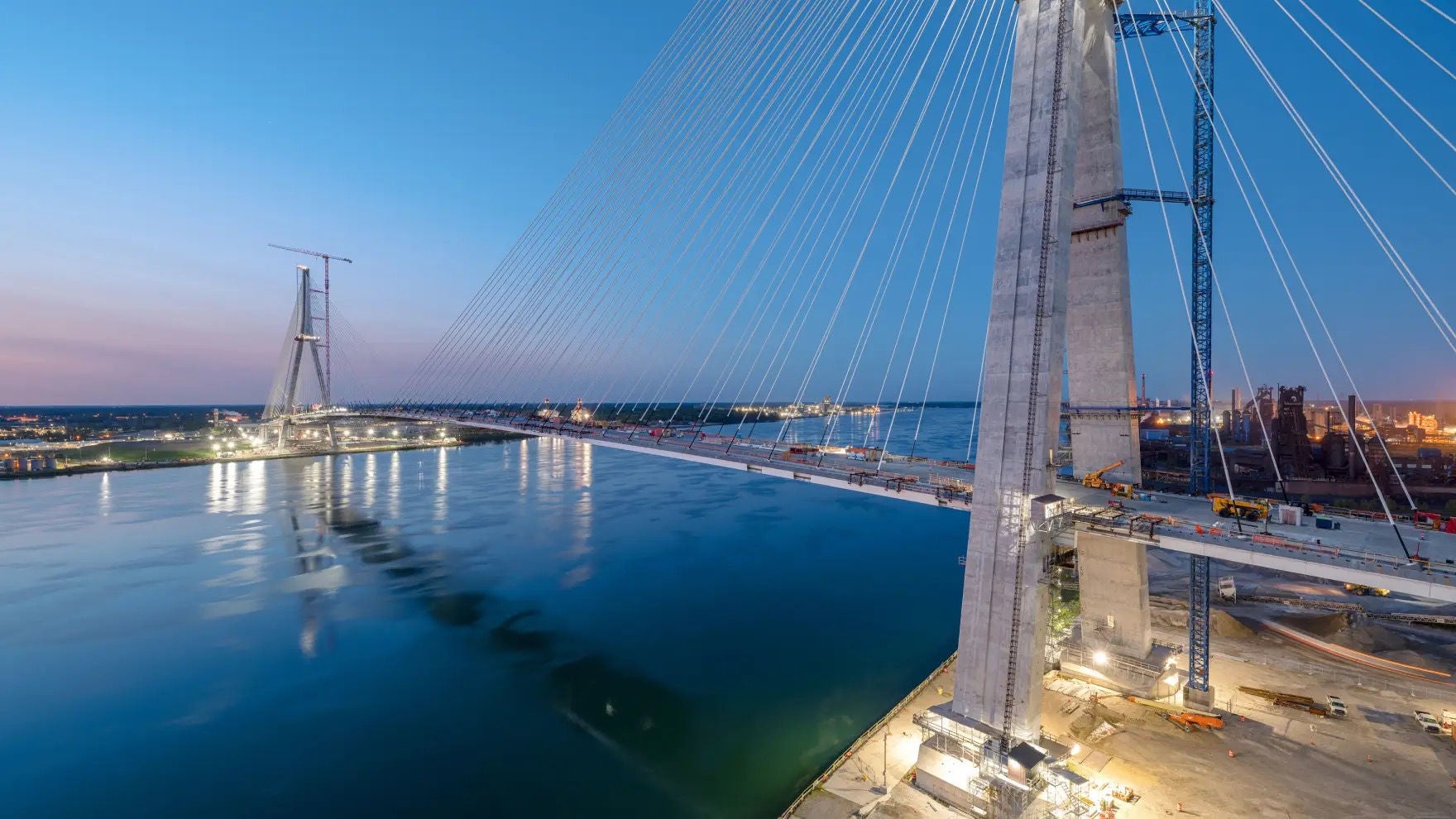 Reaching over 700 feet (200 meters), the bridge towers in Detroit and Windsor add a new feature to the skyline on both sides of the river.
 Reaching over 700 feet (200 meters), the bridge towers in Detroit and Windsor add a new feature to the skyline on both sides of the river.
Six lanes of traffic. A structure extending 1.6 miles (2.5 kilometers) end to end. A $6.4 billion CDN price tag. The bridge's scale demanded careful coordination from start to finish.
To meet the durability standards of two national governments, codes, specifications, and teams had to be aligned on both sides of the border. The concrete had to endure in practice too — able to withstand decades of freeze-thaw cycles in the Great Lakes winters and the region’s hot, stormy summers.
Partway through construction, a fresh shift arose. The cement industry adopted a new standard that reshaped the project’s material requirements. With the bridge already underway, Amrize’s Alpena plant in Michigan transitioned its production from Type I/II cement to OneCem, Type IL Portland limestone cement — a lower-embodied-carbon alternative that met the new mandate.
Ensuring the replacement material worked on the job site would be critical.
The Solution: A seamless fix for a shifting standard
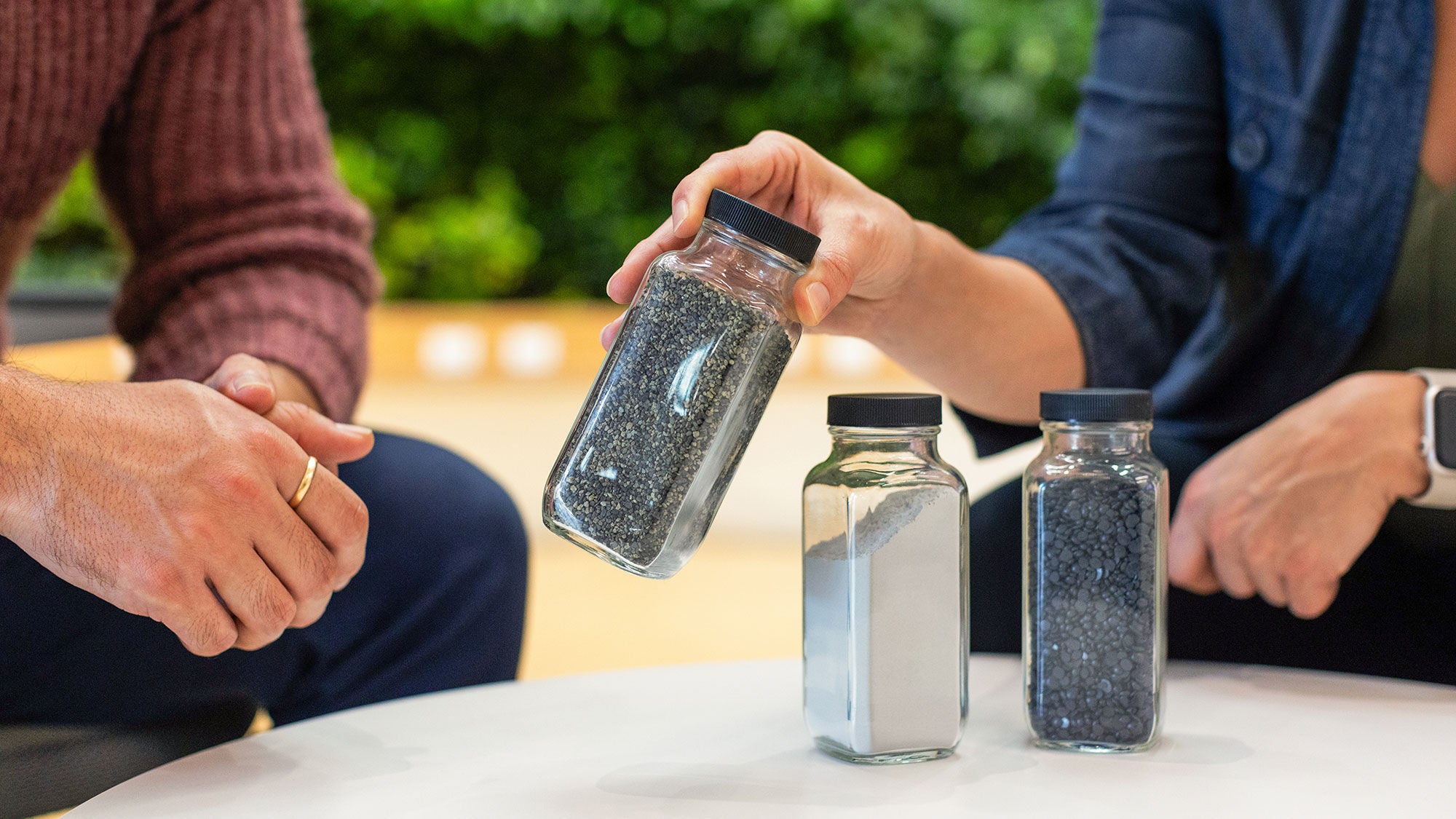
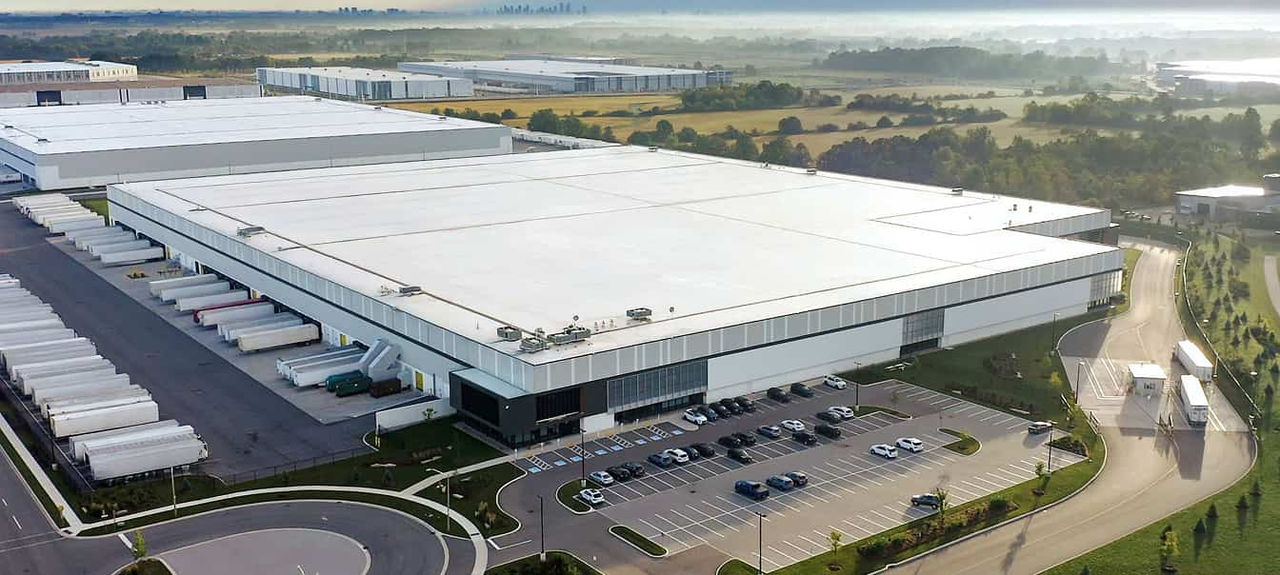
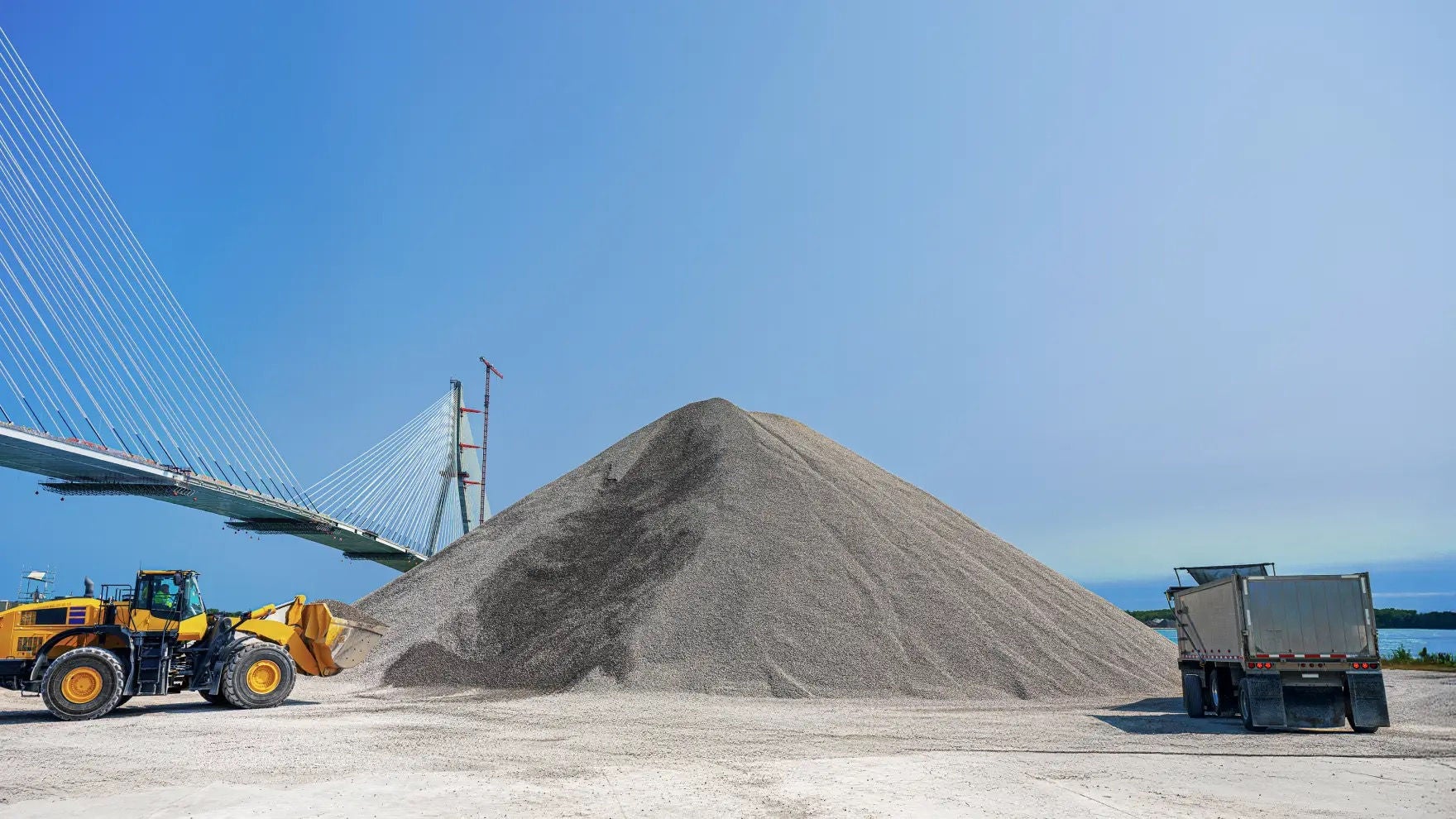
 OneCem cement was shipped from Amrize’s Alpena plant to its Detroit terminal, where the facility’s state-of-the-art blender prepared tailored, consistent material for SRM.
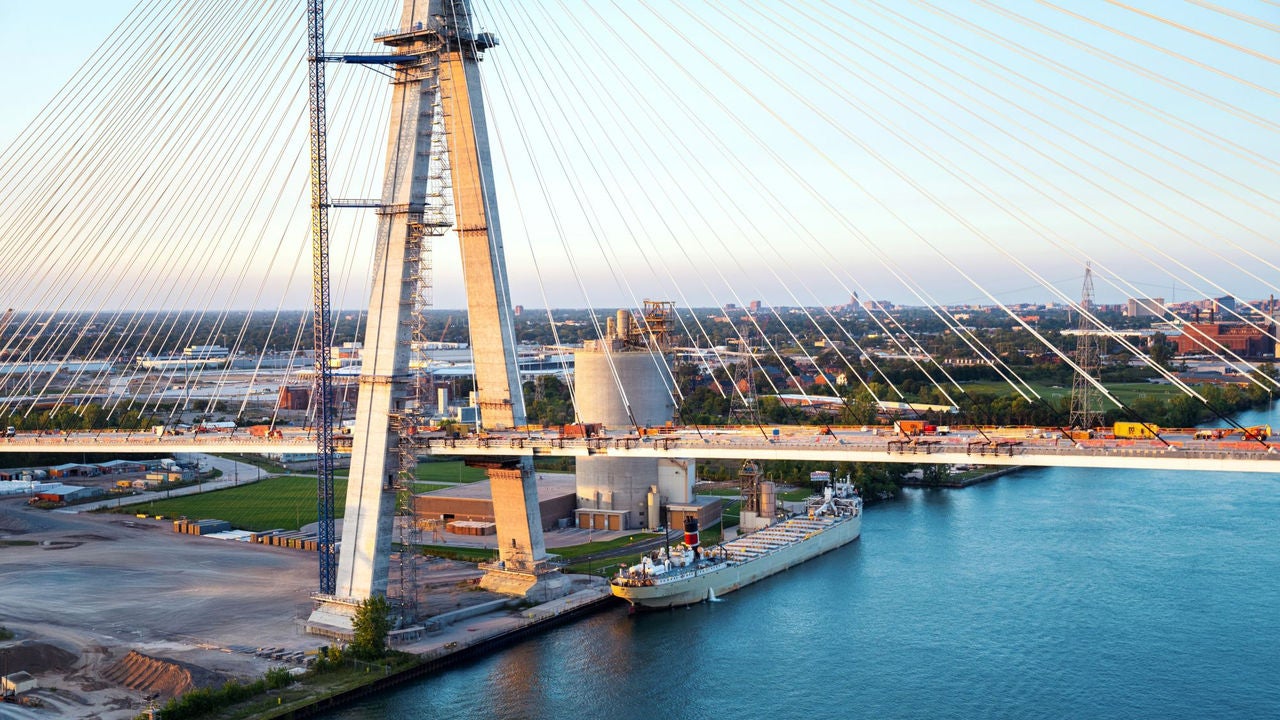 OneCem cement was shipped from Amrize’s Alpena plant to its Detroit terminal, where the facility’s state-of-the-art blender prepared tailored, consistent material for SRM.
Sustained collaboration with partner Bridging North America (BNA) was key to managing the material transition without slowing a live, multi-year construction schedule. At every stage, Amrize’s technical team validated that OneCem would deliver the same strength, durability, and long-term performance as the original specified material.
“This was a once-in-a-lifetime opportunity, and we knew our material expertise, paired with the terminal’s blending and distribution capabilities, could support a seamless transition to OneCem. We made the switch with great care and took pride in continuing to be the cementitious provider of choice for the project.”
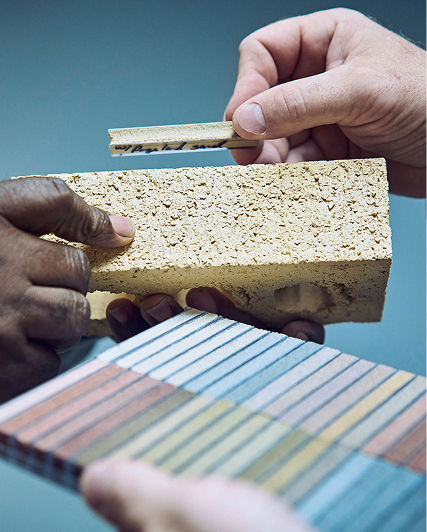
Amrize supplied a high-performance, customized OneCem cement blend, tailored to meet the bridge’s expected 125-year design life. The addition of slag cement and silica fume further reduced the carbon footprint. At the Detroit terminal, Amrize’s team blended the material with the speed, accuracy, and quality the project demanded before supplying it to SRM Concrete throughout the multi-year build.
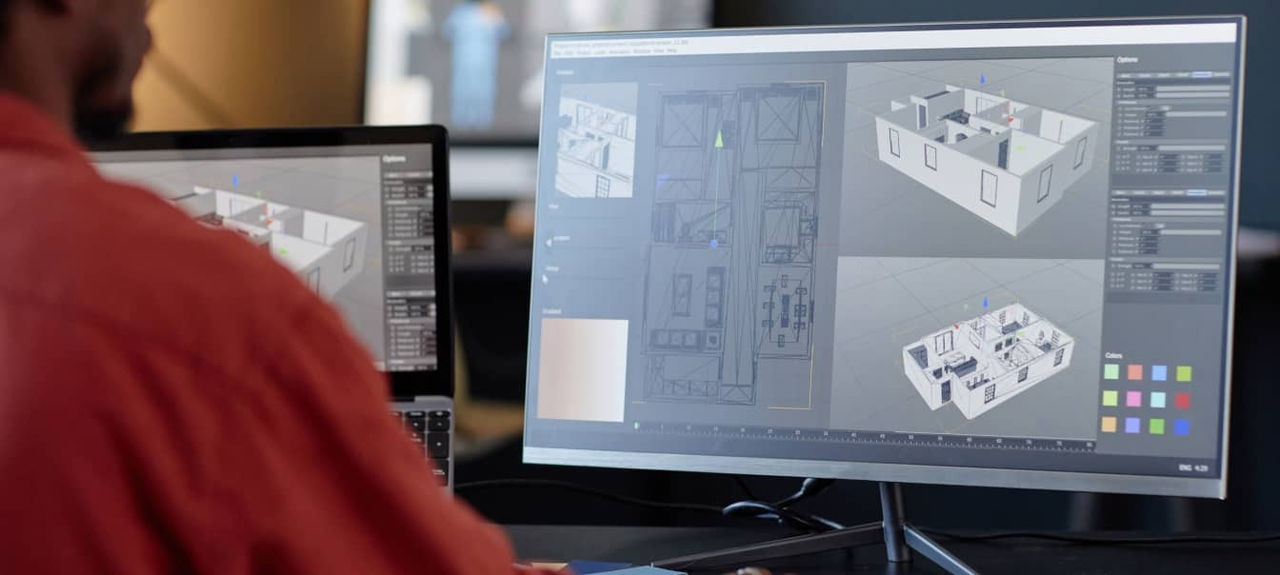
Behind the scenes, Amrize and SRM Concrete collaborated to develop and validate multiple mix designs. Robotics-assisted laboratory testing, drone-based visual data collection and digital order management tools helped verify that the custom OneCem formulation consistently met project specifications while keeping operations efficient and safe.
“We tapped Amrize for innovation and expertise. The collaboration, technology and proximity to the site allowed us to deliver at a different level. There was never a concern about material availability — supply remained consistent throughout the many years of construction.”
The Results: Open for the long haul
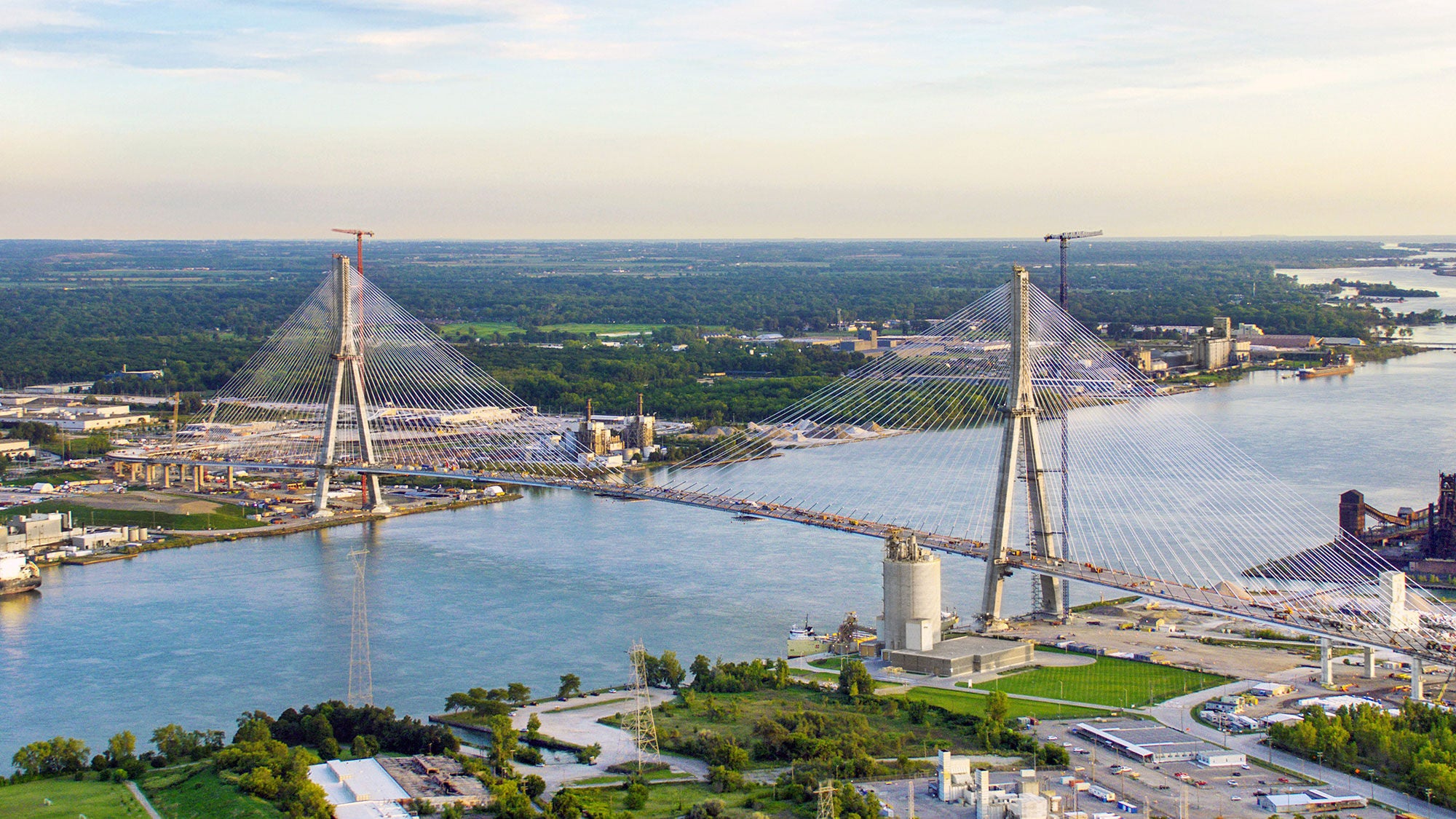 Just as NHL legend Gordie Howe united Canadian and U.S. fans in the spirit of sportsmanship, his namesake bridge connects people, communities, and economies on both sides of the border in a shared mission of progress.
The Gordie Howe International Bridge opened on July 27, 2026, creating thousands of jobs on both sides of the border, and permanent positions that support the crossing's ongoing operation. Cyclists and pedestrians can enjoy the bridge’s path — which extends well beyond the river crossing itself — linking Windsor’s Great Lakes Waterfront Trail to Detroit’s Iron Belle Trail and Great Lakes Way. And all this comes with a lower carbon footprint, thanks in part to the custom cement Amrize supplied.
Nearly a century after the Ambassador Bridge first opened this corridor, Detroit and Windsor now have a second crossing between the two countries — this one built to move people, trade, and opportunities for the next 125 years.